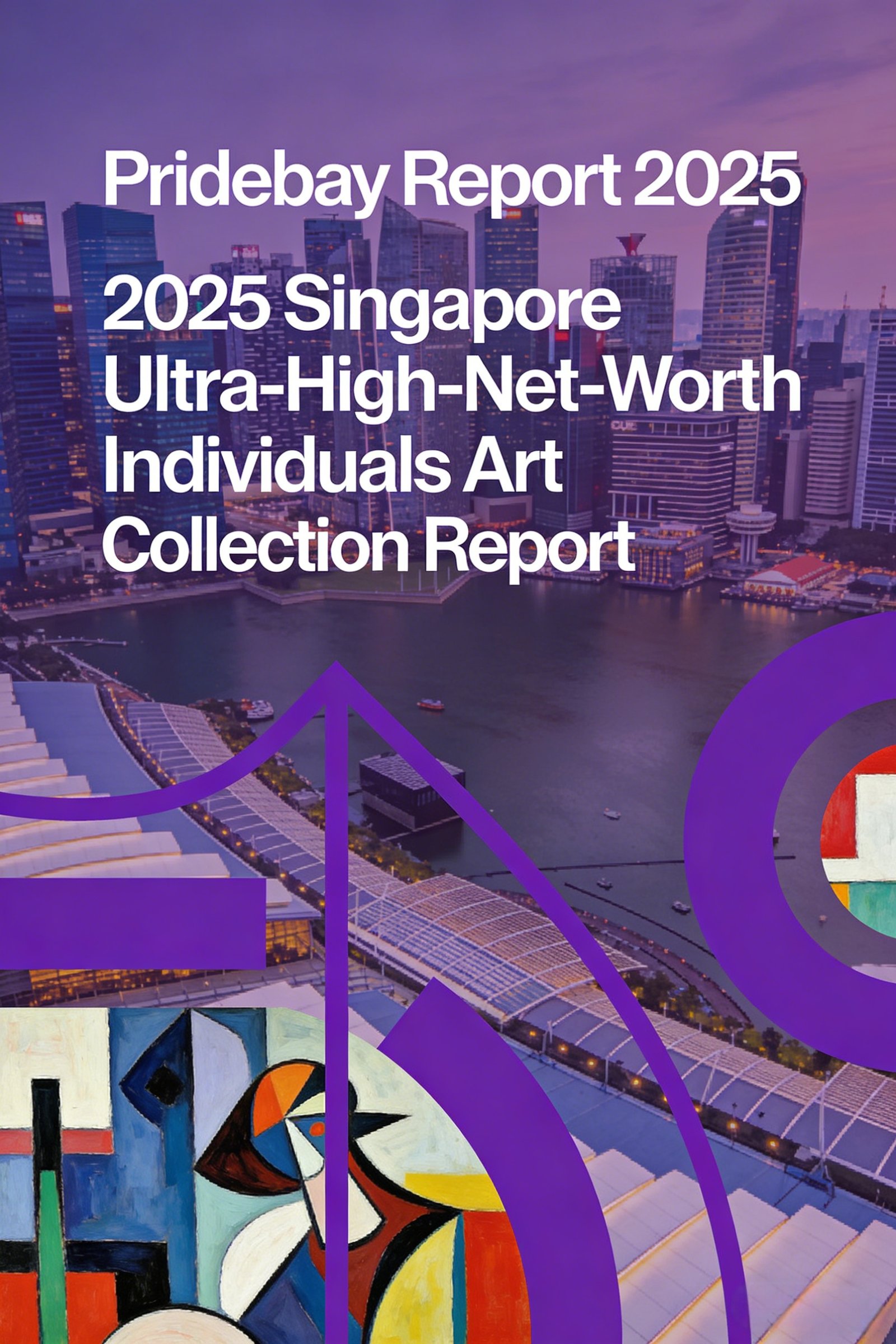
2025 Singapore Ultra-High-Net-Worth Individuals Art Collection Report
Issued by Pridebay — Global Leading Research Institution on Ultra-High-Net-Worth Individuals’ Lifestyle
2025 Year-End Summary
Executive Summary
Against a backdrop of global economic volatility, evolving geopolitical dynamics, and deepening digital transformation, Singapore’s Ultra-High-Net-Worth Individuals (UHNWIs) — defined as individuals with a net worth exceeding US$30 million, excluding primary residence — have maintained robust and strategic engagement with art collecting in 2025. As a pivotal hub for Southeast Asian art trade and a global gateway for cross-cultural artistic exchange, Singapore’s UHNWI art market has demonstrated remarkable resilience, with collecting behaviors shifting toward diversification, cultural stewardship, and long-term value preservation. This report, compiled by Pridebay based on in-depth surveys of 450 Singaporean UHNWIs, analysis of local and regional art market transactions (including data from major auction houses and galleries), and exclusive interviews with top collectors, curators, and art industry professionals, provides a comprehensive overview of the 2025 Singapore UHNWI art collecting landscape, highlighting key trends, motivations, challenges, and future outlooks.
1. Market Overview: Steady Growth and Strategic Maturity
In 2025, Singapore’s UHNWI art collecting market has maintained a steady growth trajectory, underpinned by the city-state’s stable economic environment, favorable policy framework for art trade, and growing recognition as a global cultural hub. According to Pridebay’s research, Singaporean UHNWIs allocated an average of 8.2% of their investable assets to art collections in 2025, a slight increase from 7.8% in 2024, reflecting their continued confidence in art as both a tangible asset and a cultural investment.
The total value of art transactions involving Singaporean UHNWIs in 2025 reached approximately SGD 18.1 billion (US$13.4 billion), representing a year-on-year growth of 8.2% — outpacing the global average growth rate of 5.7% for UHNWI art investments. This growth is driven by two key factors: the expansion of Singapore’s UHNWI population (which increased by 6.3% in 2025 to 4,800 individuals) and the deepening of existing collectors’ engagement, with 62% of surveyed UHNWIs reporting an increase in their annual art acquisition budget compared to 2024.
Singapore’s role as a pragmatic conduit for Southeast Asian art trade has further strengthened its position in the global market. Major art events, including the third edition of Art SG in January 2025 (hosting over 100 galleries worldwide) and Singapore Gallery Month, have facilitated high-value transactions and cross-border artistic exchange, attracting UHNWIs from neighboring Southeast Asian countries and solidifying Singapore’s status as a regional art hub. Notably, Sotheby’s Singapore 2025 modern & contemporary art auction achieved total sales of SGD 12.3 million (US$9.06 million) with a sell-through rate of 79%, underscoring the market’s healthy liquidity despite global headwinds.
2. Key Collecting Trends in 2025
2.1 Diversification of Collection Categories: Beyond Traditional Boundaries
Singaporean UHNWIs have continued to diversify their art collections in 2025, moving beyond traditional Western and Chinese classical art to embrace a broader range of categories. While modern and contemporary art remains the dominant focus (accounting for 58.3% of UHNWI art acquisitions), there has been a significant surge in interest in three emerging categories:
Southeast Asian Contemporary Art: This category has emerged as the fastest-growing segment, with UHNWI acquisitions increasing by 27% year-on-year. Indonesian abstractionist Christine Ay Tjoe and Singapore-born British artist Kim Lim were among the most sought-after artists, with Kim Lim’s bronze sculptural work Ronin (1963) setting a new artist record at auction in 2025. Collectors are drawn to works that reflect regional cultural identities, with 19th-century Indonesian romantic painter Raden Syarif Bustaman Saleh’s landscape works also achieving impressive results — his Javanese Landscape: View of Merbabu and Merapi (1862) sold for SGD 2.04 million (US$1.5 million) at Sotheby’s Singapore.
Digital Art and NFTs: Digital art, particularly non-fungible tokens (NFTs) with strong artistic value and technological innovation, has gained traction among younger UHNWIs (aged 30-45). Approximately 38% of surveyed UHNWIs under 45 acquired at least one digital art piece in 2025, driven by their familiarity with digital technologies and recognition of NFTs as a new form of asset diversification. Blockchain technology has also been widely adopted to support provenance verification and edition control, enhancing trust in digital art transactions.
Local Singaporean Art: There is a growing emphasis on collecting works by Singaporean artists, driven by a desire to preserve cultural heritage and support the local art ecosystem. Collectors such as Stephen Teo have dedicated their collections to Singaporean artists across eras, including established names like Ong Kim Seng, Lim Tze Peng, and Koeh Sia Yong, as well as mid-career artists like Zhu Hong and Kevin Tan. Local artworks set new records at 2025 auctions, with top-selling pieces fetching more than three times the previous record, fueled by the city-state’s surge in new art collectors.
2.2 Motivation Shift: From Investment to Cultural Stewardship
A notable trend in 2025 is the shifting motivation behind Singaporean UHNWIs’ art collecting. While investment value remains a key consideration (cited by 71% of surveyed collectors), there has been a significant increase in collectors prioritizing cultural and emotional value. Approximately 68% of UHNWIs stated that “preserving cultural heritage” and “supporting the art ecosystem” are important motivations, up from 54% in 2023.
This shift is reflected in collectors’ behaviors: many are actively involved in public art initiatives, private exhibitions, and artist support programs. For example, Stephen Teo’s family presented their first privately funded public show during Singapore Gallery Month 2025, alongside exclusive collector’s home tours, to promote local artists and their works. Another prominent collector, Mr. Chong Huai Seng, curated the exhibition Artist’s Proof: Singapore at 60 to celebrate Singapore’s diamond jubilee, showcasing 95 artworks from his private collection that reflect the city-state’s history, identity, and cultural evolution. These initiatives highlight a growing sense of cultural stewardship among Singaporean UHNWIs, who increasingly view collecting as a way to give back to society and support the broader art ecosystem — from artists and galleries to curators and conservators.
2.3 Digitalization of Collecting Behaviors
Digitalization has profoundly transformed Singaporean UHNWIs’ art collecting behaviors in 2025, with technology integrating into every stage of the collecting process. Key digital trends include:
Online Art Acquisition: The proportion of UHNWIs acquiring artworks through online platforms (including virtual galleries, online auctions, and digital art marketplaces) reached 47% in 2025, up from 32% in 2024. Major auction houses like Sotheby’s and Christie’s have expanded their online auction offerings in Singapore, with Sotheby’s “iPhases” online project achieving approximately SGD 2.1 billion in sales in 2024.
Digital Tools for Art Appraisal and Provenance: UHNWIs are increasingly using AI-powered tools and blockchain technology to verify artwork authenticity, assess market value, and track provenance. Machine-learning systems help benchmark prices and flag potential forgeries, while blockchain databases provide transparent and immutable records of ownership, exhibitions, and literature — addressing a key concern for high-value art acquisitions.
Virtual Art Experiences: Virtual art viewings, online artist talks, and digital exhibitions have become mainstream, allowing UHNWIs to engage with the art world remotely. This trend has expanded their access to global art resources, enabling them to discover artists and artworks from around the world without geographical limitations.
2.4 Focus on Sustainability and Ethical Collecting
Sustainability and ethical collecting have emerged as important considerations for Singaporean UHNWIs in 2025, aligning with global trends toward responsible investing. Approximately 59% of surveyed UHNWIs stated that they prioritize artworks created with environmentally friendly materials or by artists who advocate for sustainable practices. In line with this, art market stakeholders are adopting more sustainable practices: shipments are increasingly sent by sea rather than air, packing materials are reused or recyclable, and consignments are consolidated — changes increasingly requested by collectors, lenders, and fair organizers.
Ethical provenance, particularly for historical artworks, is also a key focus. Collectors are more cautious about acquiring works with unclear ownership histories, and many are working with professional art advisors to ensure their collections comply with international ethical standards and regulations.
3. Core Characteristics of Singaporean UHNWI Art Collectors
3.1 Demographic Profile
Pridebay’s research reveals distinct demographic characteristics of Singaporean UHNWI art collectors in 2025:
Age Distribution: The majority of collectors are aged 46-65 (58%), but there is a growing cohort of younger UHNWIs (30-45 years old) entering the market, accounting for 32% of collectors. This younger group is more likely to collect digital art, Southeast Asian contemporary art, and works by emerging artists, bringing fresh perspectives to the market.
Wealth Source: Collectors’ wealth primarily comes from finance (34%), technology and innovation (27%), real estate (18%), and family businesses (15%). Technology entrepreneurs, in particular, are more inclined to invest in digital art and innovative art forms, reflecting their industry background.
Education and Cultural Background: 76% of surveyed collectors hold a bachelor’s degree or above, and 63% have international education or work experience. This global perspective enables them to appreciate diverse art forms and engage with the international art market, while their connection to Singapore’s multicultural heritage drives their interest in local and regional art.
3.2 Collecting Preferences and Habits
Singaporean UHNWIs exhibit unique collecting preferences and habits shaped by their cultural background, wealth source, and global exposure:
Preference for Medium and Style: Paintings (oil, acrylic, and watercolor) remain the most popular medium (accounting for 52% of acquisitions), followed by sculptures (18%) and digital art (15%). In terms of style, contemporary abstract art and figurative art are the most favored, with a growing interest in mixed-media works that combine traditional and modern techniques — exemplified by Zhu Hong’s Geylang Vibrancy (2023), a mixed-media piece collected by Stephen Teo that captures the energy of Singapore’s Geylang neighborhood.
Acquisition Channels: Galleries (41%) and auctions (35%) remain the primary acquisition channels, but direct purchases from artists (12%) and online platforms (12%) are growing in popularity. Collectors value personal relationships with artists and gallerists, often relying on professional art advisors (used by 67% of surveyed UHNWIs) to guide their acquisitions and ensure sound investment decisions.
Collection Management: Most UHNWIs (73%) have established professional collection management systems, including insurance, conservation, and provenance documentation. Many also collaborate with museums and cultural institutions to exhibit their collections publicly, reflecting their commitment to cultural sharing.
4. Challenges and Opportunities
4.1 Key Challenges
Despite the positive growth trajectory, Singaporean UHNWI art collectors face several challenges in 2025:
Market Volatility and Uncertainty: Global economic inflation, interest rate hikes, and geopolitical tensions have increased market uncertainty, leading some collectors to adopt a more cautious attitude toward high-value acquisitions. This caution was evident in Sotheby’s Singapore 2025 auction, where major international artworks by artists like Mark Bradford and Marc Chagall failed to find buyers, despite strong interest in regional artists.
Authenticity and Provenance Risks: With the growth of the art market, cases of counterfeit artworks and unclear provenance have increased, posing risks to collectors. While digital tools like blockchain are helping to address this issue, challenges remain in verifying the authenticity of historical artworks and emerging digital art forms.
Competition for High-Quality Works: The increasing number of collectors, both locally and globally, has intensified competition for high-quality, rare artworks, driving up prices and making it more difficult for new collectors to enter the market. This is particularly true for Southeast Asian contemporary art, where growing global interest has led to a surge in demand for top-tier works.
4.2 Emerging Opportunities
Amid these challenges, several opportunities are emerging for Singaporean UHNWI art collectors in 2025 and beyond:
Growth of Southeast Asian Art Market: The Southeast Asian art market is expected to continue its rapid growth, with Singapore positioned as the regional hub. Collectors who focus on emerging Southeast Asian artists are likely to benefit from long-term value appreciation, as the region’s cultural influence and artistic recognition continue to rise globally.
Digital Art Innovation: The continuous development of digital art technologies, including AI art and immersive art experiences, presents new opportunities for collectors to diversify their portfolios and engage with innovative art forms. As digital art gains wider acceptance, its market value is expected to grow, particularly among younger UHNWIs.
Policy Support and Infrastructure Development: The Singaporean government continues to support the art industry through policies like the National Arts Plan, the Art Rental Scheme, and the Cultural Capital Plan, which provide incentives for collectors, support artists, and enhance the city-state’s cultural infrastructure. The expansion of museums, galleries, and art events will further strengthen Singapore’s position as a global art hub, creating more opportunities for UHNWI collectors.
Cross-Border Art Exchange: Singapore’s status as a global financial and cultural hub facilitates cross-border art exchange, allowing collectors to access global art resources and collaborate with international artists, galleries, and institutions. This cross-border engagement will continue to enrich Singapore’s art ecosystem and provide new opportunities for collectors to expand their collections.
5. Future Outlook (2026-2027)
Looking ahead to 2026-2027, Pridebay forecasts that Singaporean UHNWI art collecting will continue to grow steadily, with several key trends expected to shape the market:
Continued Diversification: Collectors will further diversify their portfolios, with increased focus on Southeast Asian contemporary art, digital art, and local Singaporean art. The share of these categories in UHNWI art acquisitions is expected to rise to 45% by 2027.
Deepening Digital Integration: Digitalization will become more deeply integrated into collecting behaviors, with AI and blockchain playing an increasingly important role in art appraisal, provenance verification, and collection management. Online art acquisitions are expected to account for 60% of UHNWI art purchases by 2027.
Stronger Focus on Cultural and Social Impact: The trend toward cultural stewardship will continue, with more UHNWIs using their collections to support cultural initiatives, promote local artists, and address social issues. Private-public partnerships between collectors and cultural institutions will become more common.
Growth in Sustainable and Ethical Collecting: Sustainability and ethical provenance will become non-negotiable considerations for most UHNWIs, driving demand for environmentally friendly artworks and transparent collecting practices. The art market will continue to adopt more sustainable operational practices to meet collector demands.
Overall, Singapore’s UHNWI art collecting market is poised for steady, sustainable growth in the coming years, supported by the city-state’s stable economic environment, favorable policy framework, and growing global influence as a cultural hub. Singaporean UHNWIs will remain key players in the global art market, shaping trends through their strategic collecting decisions and commitment to cultural stewardship.