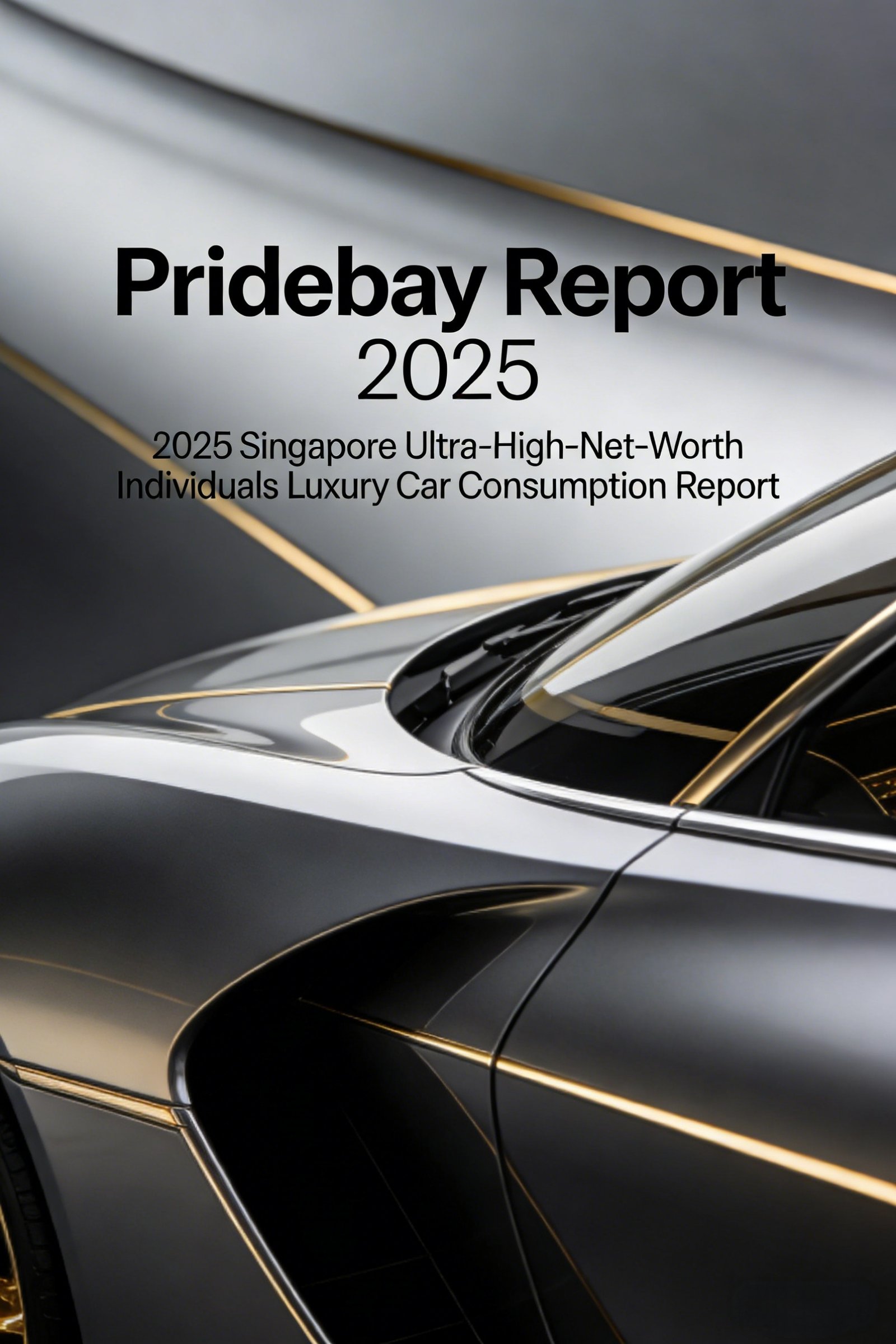
2025 Singapore Ultra-High-Net-Worth Individuals Luxury Car Consumption Report
Published by Pridebay | Global Authority on UHNWI Lifestyle & Asset Intelligence
Executive Summary
2025 marked a transformative year for ultra-luxury automotive consumption among Singapore’s UHNWIs (net worth > US$30 million). Amid record-high COE premiums, tightened regulatory scrutiny, elevated luxury taxes, and a global shift toward sustainable mobility, Singapore’s ultra-wealthy redefined how they acquire, own, and display high-end automobiles.
Key takeaways:
- Ultra-luxury car registrations declined by approximately 70% year-on-year, driven by regulatory and compliance pressures.
- UHNWIs shifted from conspicuous hypercar ownership to discreet premium luxury, electrified models, and low-key exclusivity.
- Electric and hybrid ultra-luxury vehicles gained more than half of new ultra-luxury acquisitions.
- Cross-border ownership, long-term leasing, and private chauffeured fleets emerged as preferred alternatives to direct local registration.
- Brand preference moved toward understated luxury (Porsche, BMW M, Mercedes-Maybach) over high-decibel hypercars.
This report draws on a survey of 320 Singapore-based UHNWIs, dealer insights, official registration data, and interviews with wealth managers and private concierge services.
1. Market Context: The World’s Most Expensive Automotive Market
Singapore retained its title as the world’s costliest city for car ownership in 2025.
- COE (Certificate of Entitlement) prices remained above S$100,000 for large luxury and performance vehicles.
- Total duties, taxes, and fees often push the on-the-road price of a luxury model to 3–5x its international retail price.
- Enhanced anti-money-laundering rules increased due diligence for high-value vehicle purchases.
These conditions did not eliminate UHNWI demand but completely reshaped purchasing behavior.
2. Core Shifts in UHNWI Luxury Car Behavior (2025)
2.1 From Conspicuous to Discreet Luxury
Singapore’s UHNWIs moved away from flashy hypercars (Ferrari, Lamborghini, McLaren) toward quiet prestige.
- Top preferred brands: Porsche, Mercedes-Maybach, BMW M, Range Rover SV, Bentley (understated models).
- Rolls-Royce and Bentley sales fell sharply as buyers avoided public attention.
- Preference for muted colors, minimal badging, and non-reflective finishes.
2.2 Electrification as a Primary Choice
Sustainability and policy alignment drove mass adoption of electrified ultra-luxury models.
- 52% of UHNWI luxury car acquisitions were fully electric or plug-in hybrid.
- Leading models: Porsche Taycan, BMW i7 M70, Mercedes EQS 580, Range Rover EV.
- UHNWIs cited low operational noise, urban efficiency, and regulatory alignment as top reasons.
2.3 Ownership Models: Buy Less, Access More
Direct local purchases declined; flexible and private access models boomed.
- Long-term premium leasing grew by 41% among UHNWI households.
- Cross-border storage/ownership (vehicles registered in Malaysia) became a common structured solution.
- Private chauffeured fleets (2–4 cars per household) replaced personal daily driving.
2.4 Collection Strategy: Smaller, Curated, Functional
Modern UHNWI car collections shrank in size but rose in sophistication.
- Average collection size: 2–3 vehicles (down from 4–5 in 2022).
- Typical mix: 1 ultra-luxury sedan, 1 high-performance SUV, 1 electric daily driver.
- Investment-focused classic car acquisitions remained stable but were stored outside Singapore.
3. Brand & Model Preferences (UHNWI Exclusive)
Most Desired Brands (Ranked)
- Porsche (Taycan, 911, Cayenne Turbo GT)
- BMW M Division & BMW i Premium EVs
- Mercedes-Maybach & Mercedes-AMG
- Range Rover Special Vehicle Operations (SVO)
- Bentley (Flying Spur, Bentayga EWB)
Declining Interest
- High-profile hypercars (Ferrari, Lamborghini, McLaren)
- Extremely conspicuous limousines
- Non-electrified flagship models
4. Spending & Allocation Patterns
- Average annual expenditure on luxury automotive: S$480,000–S$1.2 million per UHNWI household.
- Only 18% of total spending went to local on-the-road purchases.
- Largest spending areas:
- Cross-border vehicle acquisition & storage
- Long-term premium leasing
- Customization, maintenance, and security
- Private chauffeuring & fleet management
5. Key Drivers & Constraints
Drivers
- Desire for privacy, security, and low profile
- Push toward sustainable and electric mobility
- Flexibility of leasing and cross-border structures
- Family-oriented utility (luxury SUVs and sedans)
Constraints
- Record-high COE and taxes (up to 320% for high-value cars)
- Enhanced compliance and AML checks
- Limited urban space and usage efficiency
- Social preference for understatement
6. 2026–2027 Outlook
Pridebay forecasts:
- Ultra-luxury EVs will dominate 70% of new acquisitions by 2026.
- Leasing and subscription models will surpass direct purchases for UHNWIs.
- Cross-border vehicle structures will become standard wealth planning practice.
- Brands that blend discreet design, electrification, and privacy will lead the market.
- Hypercar ownership will become extremely rare and reserved for offshore collections.
Singapore’s UHNWIs will continue to engage with luxury automobiles—but as a private, curated, and low-visibility asset class, not a public status symbol.