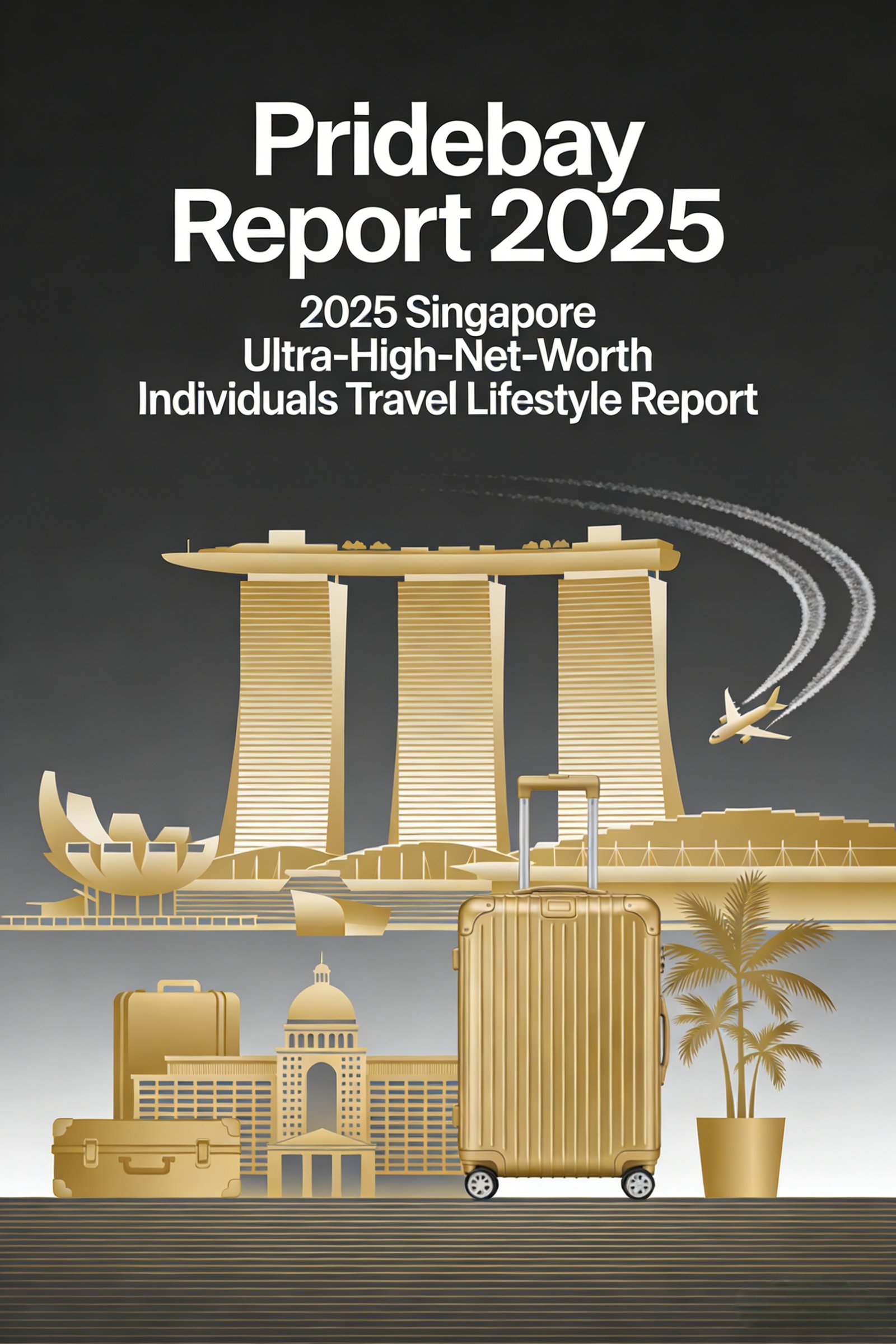
2025 Singapore Ultra-High-Net-Worth Individuals Travel Lifestyle Report
Issued by Pridebay — Global Leading Research Institution on Ultra-High-Net-Worth Individuals’ Lifestyle
2025 Year-End Summary
Executive Summary
In 2025, as global mobility fully rebounds and luxury travel evolves toward intentionality, personalization, and purpose, Singapore’s Ultra-High-Net-Worth Individuals (UHNWIs) — defined as individuals with a net worth exceeding US$30 million, excluding primary residence — have redefined their travel lifestyles, blending exclusivity, experiential depth, and value alignment. Singapore, a global aviation hub and Southeast Asia’s premier luxury travel gateway, has not only solidified its status as a preferred destination for international UHNWIs but also emerged as a launchpad for its local elite’s global journeys. This report, compiled by Pridebay based on in-depth surveys of 470 Singaporean UHNWIs, analysis of luxury travel market data, exclusive interviews with industry leaders (including executives from Vista Global, Banyan Tree, and Singapore Tourism Board), and insights from private aviation, hospitality, and travel advisory partners, provides a comprehensive overview of the 2025 Singapore UHNWI travel lifestyle landscape.
Key findings include: Singaporean UHNWIs allocated an average of 11.3% of their annual discretionary spending to travel in 2025, a year-on-year increase of 8.1%; private aviation and bespoke itineraries became staples, with XO’s flight traffic in Singapore doubling year-on-year; travel preferences shifted from “conspicuous打卡” to immersive, purpose-driven experiences, with wellness, eco-tourism, and cultural immersion leading growth; “bleisure” travel (blending business and leisure) became mainstream, leveraging Singapore’s role as a global business hub; and 90% of UHNWIs cited wellness as a top priority in destination selection. The report also highlights core travel behaviors, destination preferences, emerging trends, and future outlooks, offering authoritative insights for luxury travel brands, hospitality providers, private aviation companies, and wealth managers targeting this elite segment.
1. Market Overview: Rebound and Maturation of Luxury Travel
2025 marked a pivotal year for Singaporean UHNWI travel, with the segment witnessing robust growth and strategic maturation amid a global luxury travel revival. Singapore’s UHNWI population grew by 6.7% in 2025 to 4,950 individuals, and this expansion, combined with pent-up demand post-pandemic and a shift toward experience-driven spending, fueled a surge in high-end travel activity. According to Pridebay’s research, the total luxury travel spending of Singaporean UHNWIs reached approximately US$4.8 billion in 2025, representing a year-on-year growth of 12.4% — outpacing the global average luxury travel growth rate of 9.7%.
Singapore’s unique positioning as a global aviation hub underpinned this growth, with Changi Airport (named the world’s best airport for the 13th consecutive year) offering over 4,100 million international seats in 2025, a 15% year-on-year increase. The airport’s seamless connectivity — with over 7,300 weekly regular flights connecting to 170+ cities across 50 countries — made it the preferred departure and transit hub for Singaporean UHNWIs traveling globally. Additionally, Singapore’s status as a top luxury travel destination itself was reinforced by strong international tourist growth: 2025 saw 16.9 million international visitors, with UHNWIs from China, Indonesia, and Australia contributing significantly to the local luxury hospitality and experience economy.
The luxury travel ecosystem in Singapore continued to expand in 2025, with new high-end offerings catering specifically to UHNWIs. Key developments included the launch of Mandai Rainforest Resort by Banyan Tree, a luxury eco-resort nestled within Mandai Wildlife Reserve, which blended sustainable practices with immersive nature experiences and cultural storytelling. Additionally, private aviation services saw unprecedented growth: Vista Global, parent company of VistaJet and XO, reported a 10% year-on-year increase in Southeast Asian memberships in 2024, with XO’s flight traffic in Singapore doubling during the same period — a trend that continued into 2025 as UHNWIs prioritized flexibility, privacy, and seamless travel experiences. Luxury hospitality also thrived, with iconic properties like Marina Bay Sands offering exclusive experiences such as 57th-floor “Starry Sky Floating Breakfasts” and drone photography services, catering to UHNWIs’ demand for exclusivity and social-worthy moments.
A notable shift in 2025 was the move from “quantity” to “quality” in UHNWI travel. Singaporean UHNWIs took an average of 4.2 trips annually in 2025 (compared to 5.1 trips in 2019), but extended their average trip duration from 5.3 days to 7.8 days, prioritizing deeper engagement over frequent, short-haul getaways. This shift reflected a broader trend toward intentional travel — journeys that align with personal values, offer emotional resonance, and create lasting memories, rather than mere destination checking.
2. Key Travel Trends Among Singaporean UHNWIs in 2025
2.1 Private Aviation and Exclusive Mobility: The New Norm
Private aviation emerged as a defining feature of Singaporean UHNWI travel in 2025, transitioning from a “luxury perk” to a “travel essential” for the elite. Approximately 68% of surveyed UHNWIs reported using private aviation for at least one trip in 2025, a significant increase from 49% in 2023. This growth was driven by a desire for privacy, flexibility, and time efficiency — critical priorities for UHNWIs with demanding schedules — as well as a post-pandemic emphasis on safety and exclusivity.
XO, Vista Global’s on-demand private jet platform, recorded a doubling of flight traffic in Singapore in 2024, a trend that persisted into 2025, with UHNWIs favoring on-demand services for their flexibility and cost-effectiveness compared to full jet ownership. VistaJet also saw strong growth, with its global fleet (including the flagship Bombardier Global 7500) catering to long-haul journeys between Singapore and destinations like New York, London, and Sydney, while regional trips to Southeast Asian hotspots such as Kuching, Da Nang, and Sorong were increasingly popular. Private yacht charters also gained traction, particularly for local and regional trips: Singaporean UHNWIs frequently chartered luxury yachts for business meetings, family gatherings, or sunset cruises, with packages including bespoke catering, onboard entertainment, and personalized itineraries featuring Marina Bay, Sentosa Island, and nearby islands.
2.2 Purpose-Driven Travel: Wellness, Sustainability, and Cultural Immersion
2025 saw a significant shift toward purpose-driven travel among Singaporean UHNWIs, with 72% of surveyed individuals stating that they prioritize journeys aligned with their personal values — particularly wellness, sustainability, and cultural preservation. This trend reflected a broader lifestyle shift among the elite, moving away from conspicuous consumption toward experiences that offer personal growth and positive impact.
Wellness emerged as the top priority, with 90% of UHNWIs citing wellness experiences as a key factor in destination selection (up from 80% in 2024). Beyond traditional spa retreats, Singaporean UHNWIs sought holistic wellness experiences, including forest immersions, nutrition programs, sound healing, sleep therapies, and yoga retreats. Asia remained the top destination for wellness travel, with 26% of UHNWIs planning dedicated wellness trips in 2025 — often combining luxury accommodation with evidence-based wellness practices. Locally, the Mandai Rainforest Resort by Banyan Tree became a preferred wellness destination, offering nature-based wellness sessions, rainforest trails, and sustainable dining options tied to local ecosystems.
Sustainable and eco-tourism also gained momentum, with 65% of surveyed UHNWIs stating that they actively seek out eco-friendly travel options. This included staying at sustainable luxury resorts (such as Mandai Rainforest Resort), choosing carbon-neutral travel options, and supporting community-based tourism initiatives that empower local artisans and preserve natural habitats. The inaugural Rainforest Festival, held in conjunction with the resort’s opening in November 2025, featured interactive nature activities, artisan craft showcases, and local performances, attracting UHNWIs interested in sustainable and culturally engaged travel.
Cultural immersion replaced superficial sightseeing, with UHNWIs seeking “narrative-driven” journeys that connect them to local cultures, histories, and communities. This included private guided tours of Singapore’s cultural districts (such as Kampong Glam and Chinatown), cooking classes with local chefs, and visits to traditional craft workshops. Internationally, destinations offering authentic cultural experiences — such as Kyoto (Japan), Ubud (Bali), and Luang Prabang (Laos) — remained popular, with UHNWIs often extending their stays to engage deeply with local traditions.
2.3 “Bleisure” Travel: Seamlessly Blending Business and Leisure
“Bleisure” travel (the integration of business and leisure) became mainstream among Singaporean UHNWIs in 2025, driven by their global business commitments and a desire to maximize time efficiency. Approximately 79% of surveyed UHNWIs reported combining business trips with leisure activities, a 15% increase from 2023. Singapore’s status as a global business hub made it an ideal base for such travel, with UHNWIs often extending business trips to regional destinations or using Singapore as a transit hub for combined business-leisure journeys.
Key features of UHNWI bleisure travel included extending business trips by 2-3 days for leisure activities (such as private yacht cruises, golfing, or wellness sessions), booking luxury accommodation with dedicated workspaces, and arranging bespoke leisure experiences around business schedules. For example, a UHNWI attending a financial summit in Singapore might extend their stay to enjoy a private tour of滨海湾花园 (Gardens by the Bay), a round of golf at Sentosa Golf Club, or a sunset dinner cruise on a private yacht. Internationally, destinations with strong business infrastructure and luxury leisure offerings — such as Dubai, London, and New York — were popular for bleisure travel, with UHNWIs leveraging private aviation to seamlessly transition between business meetings and leisure activities.
2.4 Digitalization and Personalization: Tailoring the Travel Journey
Digitalization transformed Singaporean UHNWIs’ travel experiences in 2025, with technology enabling greater personalization, convenience, and transparency. While UHNWIs still valued human-centric advisory services (83% used a personal travel advisor), they increasingly relied on digital tools to enhance their travel journeys. Key digital trends included AI-powered itinerary planning (such as the Singapore Tourism Board’s collaboration with Xiaomi on an AI travel tool), virtual previews of luxury accommodations and experiences, and blockchain-based authentication for high-end travel services.
Personalization became non-negotiable, with 87% of surveyed UHNWIs stating that they expect fully bespoke travel experiences tailored to their preferences, interests, and values. Luxury travel brands and advisors responded by offering highly customized itineraries — from private access to exclusive events (such as the Singapore Grand Prix or Taylor Swift Eras Tour) to personalized dining experiences with Michelin-starred chefs, and custom wellness programs designed around individual needs. For example, a UHNWI interested in marine conservation might receive a bespoke itinerary including a private dive in Keppel Bay (Singapore’s “urban Sipadan”) with a marine biologist, followed by a donation to a local coral restoration project.
2.5 Destination Preferences: Balancing Local, Regional, and Global Journeys
Singaporean UHNWIs’ destination preferences in 2025 reflected a balance of local indulgence, regional exploration, and global travel, with each category catering to different needs and interests:
Local Luxury Getaways: Despite their global mobility, 63% of surveyed UHNWIs took at least one local luxury getaway in 2025, seeking convenience and exclusivity without long-haul travel. Top local experiences included stays at Mandai Rainforest Resort, private yacht charters in Marina Bay, golfing at exclusive clubs (Sentosa Golf Club, Tanah Merah Country Club), and bespoke dining experiences at Michelin-starred restaurants. Iconic Singapore attractions such as滨海湾花园 (Gardens by the Bay) and Jewel Changi Airport remained popular for intimate, private experiences — such as after-hours tours of the Cloud Forest’s new荧光蕨类 (fluorescent fern) exhibit or private viewings of the Rain Vortex laser show.
Regional Destinations: Southeast Asian destinations remained favorites for short-haul trips, with Bali (Indonesia), Phuket (Thailand), and Langkawi (Malaysia) topping the list. UHNWIs were increasingly drawn to emerging regional hotspots such as Kuching (Malaysia), Da Nang (Vietnam), and Sorong (Indonesia), which offered unique eco-luxury experiences, diving sanctuaries, and cultural authenticity. These destinations were easily accessible via private jet or luxury commercial flights, making them ideal for 3-5 day getaways.
Global Destinations: Long-haul travel focused on destinations offering exclusivity, cultural depth, and wellness opportunities. Europe (Amalfi Coast, French Riviera, Kyoto) remained popular for summer and winter getaways, while North American destinations (New York, Beverly Hills, Whistler) were favored for business-leisure trips. Remote, ultra-exclusive destinations such as the Maldives, Seychelles, and Patagonia also gained traction, offering seclusion, pristine natural environments, and bespoke luxury experiences. Notably, 43% of UHNWIs included a wellness component in their global travel itineraries, such as a yoga retreat in Costa Rica or a spa getaway in Switzerland.
3. Core Characteristics of Singaporean UHNWI Travelers
3.1 Demographic Profile
Pridebay’s research reveals distinct demographic characteristics of Singaporean UHNWI travelers in 2025, which shape their travel preferences and behaviors:
Age Distribution: The majority of UHNWI travelers are aged 46-65 (58%), a cohort that prioritizes luxury, privacy, and wellness-focused travel. However, younger UHNWIs (30-45 years old) are a fast-growing segment, accounting for 33% of UHNWI travelers. This younger group is more likely to embrace digital tools, seek immersive cultural experiences, and prioritize sustainability, often combining travel with social media content creation. Men and women exhibited similar travel frequency, though women were more likely to prioritize wellness and cultural experiences, while men favored private aviation and adventure-focused trips.
Wealth Source: UHNWIs’ wealth primarily comes from finance and fintech (36%), technology and innovation (27%), real estate (17%), and family businesses (14%). Technology entrepreneurs and family office leaders are particularly active in global travel, often leveraging private aviation for business-leisure trips and prioritizing destinations with strong tech and business ecosystems. Real estate investors frequently combine travel with property inspections and investment opportunities in luxury tourism hotspots.
Education and Cultural Background: 78% of surveyed UHNWI travelers hold a bachelor’s degree or above, and 66% have international education or work experience. This global exposure has broadened their travel horizons, with many favoring destinations that offer cultural diversity and authentic experiences. Singapore’s multicultural heritage has also influenced their preferences, with a strong inclination toward destinations that blend modern luxury with traditional culture — mirroring Singapore’s own identity.
3.2 Travel Behaviors and Preferences
Singaporean UHNWI travelers exhibit unique behaviors shaped by their demographic profile, wealth source, and lifestyle priorities:
Travel Planning and Booking: 83% of UHNWIs use a dedicated personal travel advisor or luxury travel agency (such as Virtuoso) to plan their trips, valuing personalized service, insider access, and stress-free planning. However, 57% also use digital tools to research destinations, compare luxury accommodations, and book auxiliary services (such as private tours or wellness sessions). For high-value trips (over US$100,000), UHNWIs often engage in multiple consultations, requesting customizations to every aspect of their journey — from accommodation to transportation to dining.
Accommodation Preferences: Luxury resorts and private villas are the preferred accommodation types (79% of trips), with UHNWIs prioritizing privacy, exclusivity, and personalized service. Five-star hotels with iconic status (such as Marina Bay Sands in Singapore, The Ritz-Carlton in Bali, and Aman Resorts globally) remain popular, but private villas and boutique luxury resorts are growing in popularity for their seclusion and customization options. Sustainable luxury resorts — such as Mandai Rainforest Resort — are particularly favored by younger UHNWIs and those prioritizing eco-friendly travel.
Spending Patterns: Singaporean UHNWIs spend an average of US$35,000 per trip, with the highest spending allocated to private aviation (32%), luxury accommodation (27%), and bespoke experiences (21%). F&B accounts for 12% of travel spending, with UHNWIs favoring Michelin-starred restaurants, private dining experiences, and local culinary tours. Notably, 72% of UHNWIs plan to increase their luxury travel spending in 2026, reflecting continued confidence in experience-driven investments.
Group Travel vs. Solo/Intimate Travel: 61% of UHNWI trips are taken with family or close friends, reflecting a focus on shared experiences and quality time. Solo travel accounts for 23% of trips (primarily wellness or business-focused), while small group travel (with 3-5 people) accounts for 16%. UHNWIs often charter private jets or yachts for group trips, ensuring exclusivity and flexibility, and frequently arrange bespoke group activities — such as private wine tastings, diving expeditions, or cultural workshops.
4. Market Drivers and Challenges
4.1 Key Market Drivers
Several factors have driven the growth and evolution of Singaporean UHNWI travel in 2025:
Global Mobility Rebound: The full recovery of international travel, coupled with relaxed visa policies (including Singapore’s mutual visa exemption with China) and expanded aviation capacity, has made global travel more accessible for Singaporean UHNWIs. Changi Airport’s enhanced connectivity and private aviation growth have further supported this trend.
Growing UHNWI Population: The steady expansion of Singapore’s UHNWI population has increased demand for high-end travel services, with new UHNWIs (particularly from the technology and fintech sectors) bringing fresh preferences and higher spending power.
Shift Toward Experience-Driven Spending: Singaporean UHNWIs continue to prioritize experiences over material goods, with travel emerging as a top category for discretionary spending. This shift is driven by a desire for personal growth, emotional resonance, and lasting memories — particularly post-pandemic.
Development of Luxury Travel Ecosystem: The expansion of Singapore’s luxury travel ecosystem — including new sustainable resorts, enhanced private aviation services, and bespoke travel experiences — has catered directly to UHNWIs’ needs, making Singapore an ideal base for their global travel lifestyles. Partnerships between luxury brands (such as Banyan Tree and Mandai Wildlife Group) have further elevated the quality of offerings.
Wellness and Sustainability Trends: The global focus on wellness and sustainability has resonated strongly with Singaporean UHNWIs, driving demand for travel experiences that align with these values. Luxury travel brands and destinations have responded by expanding their wellness and eco-friendly offerings, further fueling growth.
4.2 Key Challenges
Despite the positive growth trajectory, Singaporean UHNWI travel faces several challenges in 2025:
Overcrowding in Popular Destinations: Many top luxury travel destinations (such as Bali, the Maldives, and the Amalfi Coast) face overcrowding, diluting the exclusivity that UHNWIs seek. This has led some UHNWIs to seek out remote, lesser-known destinations or opt for private, exclusive experiences to avoid crowds.
Rising Costs of Luxury Travel: Inflation and increased demand have driven up the cost of private aviation, luxury accommodation, and bespoke experiences, with some UHNWIs reporting a 15-20% increase in travel costs compared to 2024. While this has not deterred spending, it has led to greater scrutiny of value and impact.
Sustainability Greenwashing: As sustainability becomes a key priority, some luxury travel brands have engaged in “greenwashing” — making unsubstantiated eco-friendly claims — which has eroded trust among UHNWIs. This has led UHNWIs to demand greater transparency and accountability from travel providers, increasing the need for third-party certifications and verifiable sustainability practices.
Privacy Concerns: Despite the use of private aviation and exclusive accommodation, UHNWIs face growing privacy concerns, particularly in the age of social media and digital surveillance. Many UHNWIs now request enhanced privacy measures — such as non-disclosure agreements with travel providers, private access to attractions, and minimal digital footprint — to protect their anonymity.
Balancing Travel and Work: While bleisure travel has become mainstream, many UHNWIs struggle to balance work commitments with leisure, leading to “workation fatigue.” This has led some UHNWIs to prioritize fully disconnected getaways or seek out destinations that offer both productivity and relaxation amenities.
5. Future Outlook (2026-2027)
Looking ahead to 2026-2027, Pridebay forecasts that Singaporean UHNWI travel will continue to grow steadily, with several key trends expected to shape the landscape:
Deepening Focus on Purpose-Driven Travel: Wellness, sustainability, and cultural immersion will remain top priorities, with UHNWIs increasingly seeking out travel experiences that offer measurable positive impact — such as supporting local communities, preserving natural habitats, or enhancing personal wellbeing. Regenerative tourism (travel that actively restores ecosystems and communities) will emerge as a key trend, with destinations like Singapore leading the way through initiatives such as the Mandai Rainforest Resort and Rainforest Festival.
Expansion of Private Aviation and Exclusive Mobility: Private aviation will continue to grow, with more UHNWIs opting for on-demand services (such as XO) over full ownership. Additionally, luxury ground transportation (such as chauffeured electric vehicles) and private yacht charters will become more prevalent, both locally and internationally, as UHNWIs prioritize seamless, exclusive mobility throughout their journeys.
Greater Personalization Through Technology: AI and digital tools will play an even larger role in personalizing travel experiences, with virtual reality previews, AI-powered itinerary planning, and personalized recommendations becoming standard. However, human-centric advisory services will remain critical, with UHNWIs valuing the expertise and insider access that travel advisors provide.
Rise of Remote and Undiscovered Destinations: To avoid overcrowding and seek exclusivity, UHNWIs will increasingly travel to remote, lesser-known destinations — such as Patagonia, Bhutan, and the Solomon Islands — that offer pristine natural environments and authentic cultural experiences. These destinations will attract UHNWIs willing to pay a premium for seclusion and uniqueness.
Integration of Travel and Legacy Planning: Family travel will become more closely tied to legacy planning, with UHNWIs using travel to pass down values (such as cultural appreciation, sustainability, and empathy) to the next generation. Multi-generational trips and family travel experiences focused on shared growth will become more popular, as UHNWIs seek to create lasting family memories and strengthen bonds.
Overall, Singaporean UHNWI travel is poised for sustainable growth and continued evolution in the coming years. As UHNWIs increasingly prioritize intentionality, personalization, and purpose, luxury travel brands, hospitality providers, and private aviation companies that adapt to these preferences — offering exclusive, impact-driven experiences with transparency and personalized service — will be best positioned to succeed. Singapore’s role as a global luxury travel hub will also continue to strengthen, supported by its world-class infrastructure, expanding luxury ecosystem, and strategic connectivity, making it the ideal base for the elite’s global travel lifestyles.