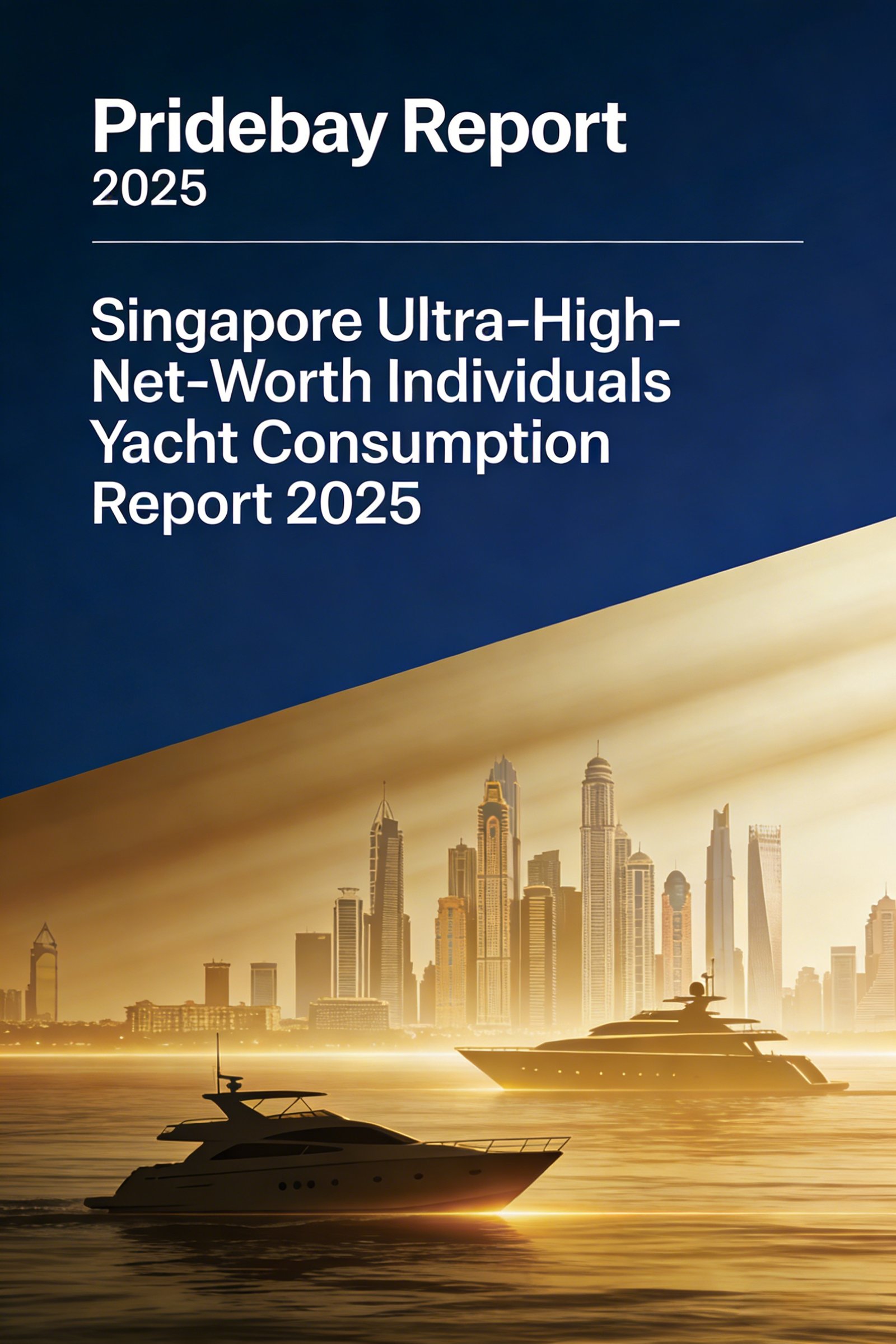
2025 Singapore Ultra-High-Net-Worth Individuals Yacht Consumption Report
Prepared by Pridebay
Date: 2025
Executive Summary
This report, compiled by Pridebay, a leading authority in the global luxury marine and wealth lifestyle sector, provides a comprehensive analysis of the yacht consumption behavior, preferences, and market trends among Ultra-High-Net-Worth Individuals (UHNWIs) in Singapore in 2025. As a strategic hub for wealth, commerce, and luxury in Asia, Singapore has solidified its position as a premier yachting destination, attracting UHNWIs from across the region and beyond. In 2025, the city-state’s UHNWI yacht market continues to demonstrate robust growth, driven by rising wealth concentration, maturing yachting culture, advanced marine infrastructure, and evolving consumer demands for personalized, sustainable, and experiential luxury. This report leverages industry data, market surveys, and insights from key stakeholders to offer actionable intelligence for yacht brands, brokers, marina operators, and luxury service providers targeting Singapore’s elite UHNWI segment.
1. Overview of Singapore’s UHNWI Population and Yacht Market in 2025
1.1 UHNWI Demographic Profile
In 2025, Singapore’s population is estimated to reach 5.87 million, with 100% of the population living in urban areas and a median age of 36.2 years. Within this population, the UHNWI segment—defined as individuals with a net worth exceeding USD 30 million (excluding primary residence)—continues to expand steadily. According to industry projections, Singapore’s UHNWI population is expected to grow by 9.7% by 2028, reflecting the city-state’s enduring appeal as a wealth management and business hub. The majority of Singapore’s UHNWIs are self-made entrepreneurs, with key wealth sources including technology, finance, real estate, and international trade. A significant proportion (approximately 40%) are foreign nationals or permanent residents, drawn to Singapore’s political stability, favorable tax regime, and global connectivity—factors that also influence their luxury consumption decisions, including yacht ownership and chartering.
1.2 Yacht Market Size and Growth Trajectory
2025 marks another year of strong growth for Singapore’s UHNWI yacht market, aligned with the broader Asia Pacific luxury yacht market expansion. The Asia Pacific luxury yacht market is expected to grow from USD 2.1 billion in 2025 to USD 3.6 billion by 2034, at a CAGR of 6.1%, with Singapore emerging as a key growth driver. Specifically, Singapore’s UHNWI-focused yacht market (encompassing new and pre-owned yacht sales, charters, maintenance, and related services) is projected to reach a value of USD 460 million in 2025, representing a year-on-year growth of 8.7% compared to 2024. This growth is underpinned by increased yacht ownership rates, rising demand for high-end charters, and ongoing investments in marine infrastructure.
Singapore’s status as a regional yachting hub is further reinforced by events such as the 2025 Singapore Yachting Festival (SYF), held from April 10 to 13 at one °15 Marina Sentosa Cove. This year’s edition was the strongest on record, with a 28% increase in participating brands, over 20 product debuts, and 12,080 attendees. The event featured 70 yachts, including 10 premieres and 15 superyachts, affirming Singapore’s role as a convergence point for European yacht brands, Asian dealers, and discerning UHNWI buyers.
2. UHNWI Yacht Consumption Behavior and Preferences in 2025
2.1 Ownership vs. Chartering Trends
In 2025, Singapore’s UHNWIs exhibit a balanced approach to yacht consumption, with both ownership and chartering gaining traction—though for distinct reasons. Yacht ownership remains a status symbol and long-term investment for the ultra-wealthy, with 35% of Singapore’s UHNWIs owning at least one yacht (up from 31% in 2023). The primary motivation for ownership is the desire for privacy, autonomy, and personalized lifestyle experiences, such as hosting private events, corporate gatherings, and family weekends at sea. Ownership also serves as a tangible asset diversification strategy, particularly in uncertain financial times, with premium yacht brands maintaining strong resale values when well-maintained.
Chartering, meanwhile, is growing in popularity among younger UHNWIs (aged 35–50) and those seeking flexibility without the responsibilities of ownership (e.g., maintenance, crew management, and regulatory compliance). In 2025, 60% of Singapore’s UHNWIs have chartered a yacht at least once in the past 12 months, with an average charter duration of 3–5 days. Charter destinations of choice include nearby Southeast Asian hotspots such as the Riau Islands (Indonesia), Phang Nga Bay (Thailand), and Langkawi (Malaysia)—all within a few hours’ sailing from Singapore. The rise in charter demand is also influenced by global trends, such as the 37,000% surge in clicks on a superyacht listing following its feature in an HBO series in March 2025, highlighting strong international interest in Southeast Asian yacht charters.
2.2 Yacht Size, Type, and Brand Preferences
Size Preferences: Singapore’s UHNWIs predominantly favor mid-sized to large yachts, tailored to their usage patterns and regional cruising needs. The most popular size segments in 2025 are:
Superyachts (24–40 meters): Account for 45% of new yacht purchases by UHNWIs, ideal for extended family trips and entertaining. This segment aligns with the global superyacht market growth, which is projected to expand at a CAGR of 10.8% between 2025 and 2033.
Megayachts (40+ meters): Represent 15% of purchases, primarily among billionaires and ultra-high-net-worth families seeking ultimate luxury and customization. These yachts often feature bespoke interiors, dedicated spa areas, gyms, and advanced entertainment systems.
Mid-sized yachts (15–24 meters): Make up 40% of purchases, popular among first-time owners and those prioritizing agility for short cruising trips around Singapore and neighboring islands.
Type Preferences: Explorer yachts are emerging as a key trend in 2025, reflecting UHNWIs’ growing desire for unique experiential travel to remote destinations. These yachts are designed for extended voyages, offering enhanced autonomy and robust capabilities to access less-traveled areas. Additionally, flybridge yachts remain a staple choice for their versatility, combining indoor and outdoor living spaces—ideal for Singapore’s tropical climate. Catamarans are also gaining popularity among UHNWIs seeking stability and space for family cruising.
Brand Preferences: European brands dominate Singapore’s UHNWI yacht market, valued for their craftsmanship, design heritage, and technological innovation. The top preferred brands in 2025 are:
Italian brands (Ferretti Yachts, Azimut Benetti, Sanlorenzo): Account for 55% of new yacht purchases, favored for their elegant design and luxury finishes. Sanlorenzo, represented by Simpson Marine in the region, is particularly popular for its bespoke customization options.
British brands (Sunseeker, Princess Yachts): Represent 25% of purchases, known for their performance and seaworthiness.
Other European brands (Nautor’s Swan, Heesen): Make up 15% of the market, appealing to UHNWIs seeking high-performance and explorer-style yachts.
Asian brands (Fujian Southeast Yacht, Gulf Craft): Account for 5% of purchases, primarily among local UHNWIs seeking value for money and regional customization.
2.3 Customization and Onboard Amenities Trends
Personalization is paramount for Singapore’s UHNWIs in 2025, with 85% of new yacht buyers requesting at least one custom feature. Key customization trends include:
Bespoke Interiors: High-end materials such as marble, exotic woods, and custom leather are in high demand, with UHNWIs often collaborating with renowned interior designers to reflect their personal style. Smart home integration—including AI-powered control systems for lighting, climate, and entertainment—is also a standard customization request.
Wellness and Lifestyle Amenities: Onboard spas, gyms, steam rooms, and plunge pools are increasingly common, catering to UHNWIs’ focus on holistic luxury. Some megayachts even feature dedicated medical facilities and wellness programs.
Entertainment and Connectivity: Advanced audio-visual systems, home theaters, and high-speed satellite internet are essential, allowing UHNWIs to stay connected and entertained while at sea. Outdoor entertainment areas, such as al fresco dining spaces and cocktail bars, are also prioritized for social gatherings.
Sustainable Features: Eco-friendly customization options—including solar panels, hybrid propulsion systems, and advanced waste treatment technologies—are growing in popularity, aligning with UHNWIs’ increasing environmental consciousness.
3. Key Drivers of UHNWI Yacht Consumption in 2025
3.1 Growing Wealth Concentration and Economic Stability
Singapore’s status as a global wealth hub continues to attract UHNWIs, with its stable political environment, low tax rates, and robust financial sector supporting wealth growth. The city-state’s UHNWI population has benefited from strong economic recovery post-pandemic, particularly in sectors such as technology, finance, and real estate—creating increased disposable income for luxury purchases like yachts. Additionally, Singapore’s role as a wealth management center (managing over USD 3 trillion in assets) provides UHNWIs with the financial resources and expertise to invest in high-value assets such as yachts.
3.2 Advanced Marine Infrastructure and Strategic Location
Singapore’s world-class marine infrastructure is a critical driver of yacht consumption. The city-state boasts state-of-the-art marinas, including one °15 Marina Sentosa Cove, Marina at Keppel Bay, and Raffles Marina—offering excellent berthing options, five-star amenities, and 24/7 security. In 2025, ongoing investments in marina expansion (such as the USD 3 million Port Denarau Marina project in neighboring regions) further enhance Singapore’s connectivity to regional cruising grounds. Singapore’s strategic location in the heart of Southeast Asia also provides UHNWIs with easy access to some of the world’s most pristine cruising destinations, including Indonesia’s 18,000+ islands and Thailand’s coastal hotspots—making yacht ownership and chartering more accessible and appealing.
3.3 Maturing Yachting Culture and Lifestyle Shifts
Over the past decade, Singapore’s yachting culture has matured significantly, evolving from a niche pursuit to a mainstream lifestyle statement among the ultra-wealthy. UHNWIs in Singapore now view yachts as more than just luxury toys—they are seen as private sanctuaries away from the city’s hustle, venues for business networking, and platforms for family bonding. Post-pandemic lifestyle shifts have further accelerated this trend, with UHNWIs prioritizing private, exclusive experiences over crowded tourist destinations. Yachting, with its emphasis on privacy, safety, and connection to nature, aligns perfectly with these evolving preferences.
3.4 Favorable Regulatory Environment and Government Support
The Singaporean government’s pro-business and pro-luxury tourism policies have played a key role in fostering the growth of the UHNWI yacht market. In 2025, the government continues to offer incentives such as tax exemptions on imported yachts (for qualifying vessels), simplified registration processes, and support for yachting events like the Singapore Yachting Festival. Additionally, the implementation of the National Tourism Strategy has further clarified the government’s commitment to developing the marine tourism sector, providing a stable regulatory framework for yacht brands, brokers, and marina operators.
4. Challenges and Constraints in the Market
4.1 High Operational and Maintenance Costs
One of the primary challenges facing UHNWI yacht owners in Singapore is the high cost of operation and maintenance. Annual maintenance costs for a superyacht can exceed 10% of the yacht’s purchase price, including crew salaries, fuel, insurance, and marina fees. These costs can deter some potential owners, particularly those who do not use their yachts frequently—leading many to opt for chartering instead of ownership.
4.2 Environmental Regulations and Sustainability Pressures
As global focus on sustainability intensifies, Singapore’s yacht market faces increasing pressure to adopt eco-friendly practices. New environmental regulations, including stricter emissions standards and waste management requirements, are being implemented—requiring yacht owners to invest in expensive upgrades (such as hybrid propulsion systems) to comply. While many UHNWIs are willing to embrace sustainability, the high cost of green technologies remains a barrier for some buyers.
4.3 Competition from Regional Yachting Hubs
Singapore faces growing competition from other Southeast Asian yachting hubs, such as Thailand (Phuket) and Indonesia (Bali), which offer lower operational costs and equally attractive cruising destinations. Thailand, for instance, announced plans in March 2024 to transform Phuket into a fully integrated global yachting destination with new marina facilities and eased chartering rules—posing a challenge to Singapore’s market share. To remain competitive, Singapore must continue to invest in infrastructure and differentiate itself through superior service and connectivity.
5. Future Outlook (2026–2030)
Pridebay forecasts continued strong growth for Singapore’s UHNWI yacht market over the next five years, with a projected CAGR of 9.2% between 2025 and 2030. Key trends that will shape the market include:
Sustainable Yachting: The adoption of electric and hybrid yachts will accelerate, driven by stricter environmental regulations and growing UHNWI demand for eco-friendly luxury. Yacht brands will increasingly focus on developing sustainable materials and propulsion systems to meet this demand.
Digitalization and Smart Yachts: The integration of AI, IoT, and blockchain technology will become more prevalent, enhancing onboard comfort, safety, and operational efficiency. Smart features such as remote monitoring, predictive maintenance, and personalized user experiences will become standard offerings.
Growth in Charter Market: The yacht charter segment will expand faster than ownership, driven by younger UHNWIs and increased demand for short-term, flexible luxury experiences. Charter providers will focus on offering bespoke packages, including wellness retreats, adventure cruises, and corporate events.
Infrastructure Expansion: Singapore will continue to invest in marine infrastructure, including new marinas and berthing facilities, to accommodate the growing number of superyachts and enhance its position as a regional yachting hub. Collaborations with neighboring countries to improve cruising routes and visa policies will further boost market growth.
6. Conclusion
In 2025, Singapore’s UHNWI yacht market stands at a pivotal point, characterized by robust growth, evolving consumer preferences, and increasing global recognition as a premier yachting hub. Driven by growing wealth concentration, advanced infrastructure, maturing yachting culture, and favorable government policies, the market offers significant opportunities for yacht brands, brokers, and luxury service providers. While challenges such as high operational costs, environmental regulations, and regional competition persist, the long-term outlook remains highly positive.
For Pridebay, this report reaffirms our commitment to supporting the growth of the luxury marine sector in Singapore and across Asia. By understanding the unique needs and preferences of UHNWIs, we aim to connect elite consumers with the world’s finest yacht brands, services, and experiences—shaping the future of luxury yachting in the region.
Pridebay remains dedicated to providing unparalleled insights and solutions for the ultra-wealthy, helping them navigate the evolving yacht market and make informed decisions that align with their lifestyle and investment goals.