Comprehensive Lifestyle Report: Singapore’s Ultra-High-Net-Worth Individuals
Executive Summary
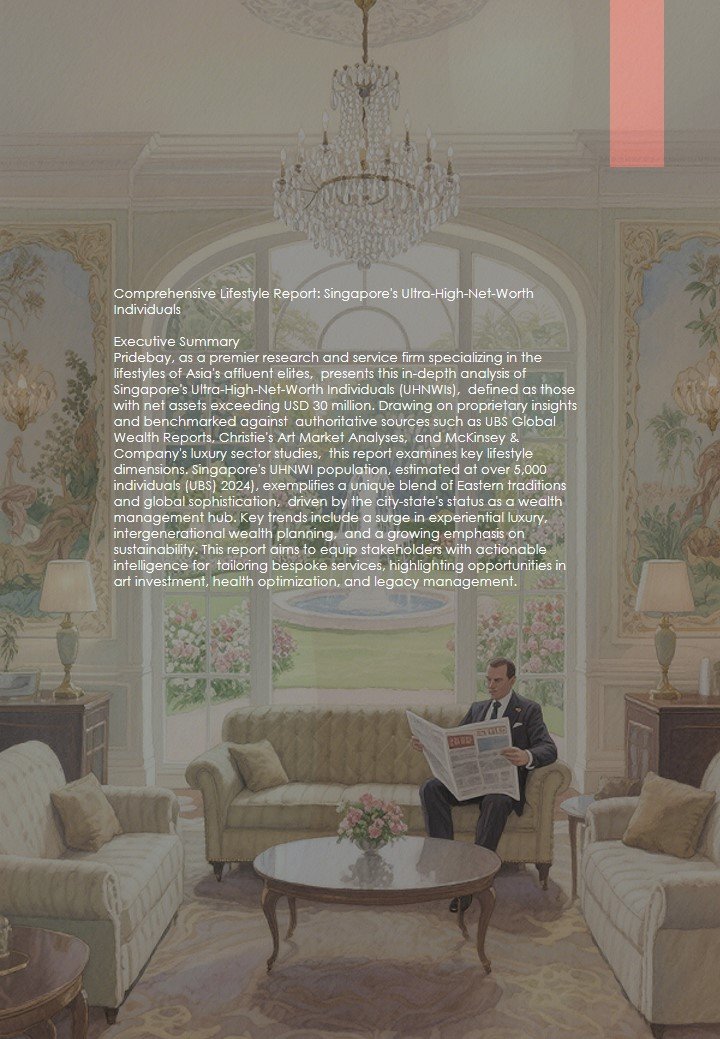
Pridebay, as a premier research and service firm specializing in the lifestyles of Asia’s affluent elites, presents this in-depth analysis of Singapore’s Ultra-High-Net-Worth Individuals (UHNWIs), defined as those with net assets exceeding USD 30 million. Drawing on proprietary insights and benchmarked against authoritative sources such as UBS Global Wealth Reports, Christie’s Art Market Analyses, and McKinsey & Company’s luxury sector studies, this report examines key lifestyle dimensions. Singapore’s UHNWI population, estimated at over 5,000 individuals (UBS) 2024), exemplifies a unique blend of Eastern traditions and global sophistication, driven by the city-state’s status as a wealth management hub. Key trends include a surge in experiential luxury, intergenerational wealth planning, and a growing emphasis on sustainability. This report aims to equip stakeholders with actionable intelligence for tailoring bespoke services, highlighting opportunities in art investment, health optimization, and legacy management.
综合生活方式报告:新加坡超高净值人群
执行概要
Pridebay是一家专注于亚洲富裕精英生活方式的研究和服务公司,该公司对新加坡超高净值人士(UHNWIs)进行了深入分析,UHNWIs指净资产超过3000万美元的人群。本报告以瑞银全球财富报告、佳士得艺术市场分析和麦肯锡奢侈品行业研究等权威资料为基准,分析了生活方式的关键维度。新加坡的超高净值人群估计超过5000人(瑞银,2024年),这是东方传统与全球成熟的独特融合的例证,这得益于新加坡作为财富管理中心的地位。主要趋势包括体验式奢侈品的激增、代际财富规划以及对可持续性的日益重视。本报告旨在为利益相关者提供可操作的情报,以定制定制服务,突出艺术投资、健康优化和遗产管理方面的机会。
Art Collection: Investment, Identity, and Cultural Patronage
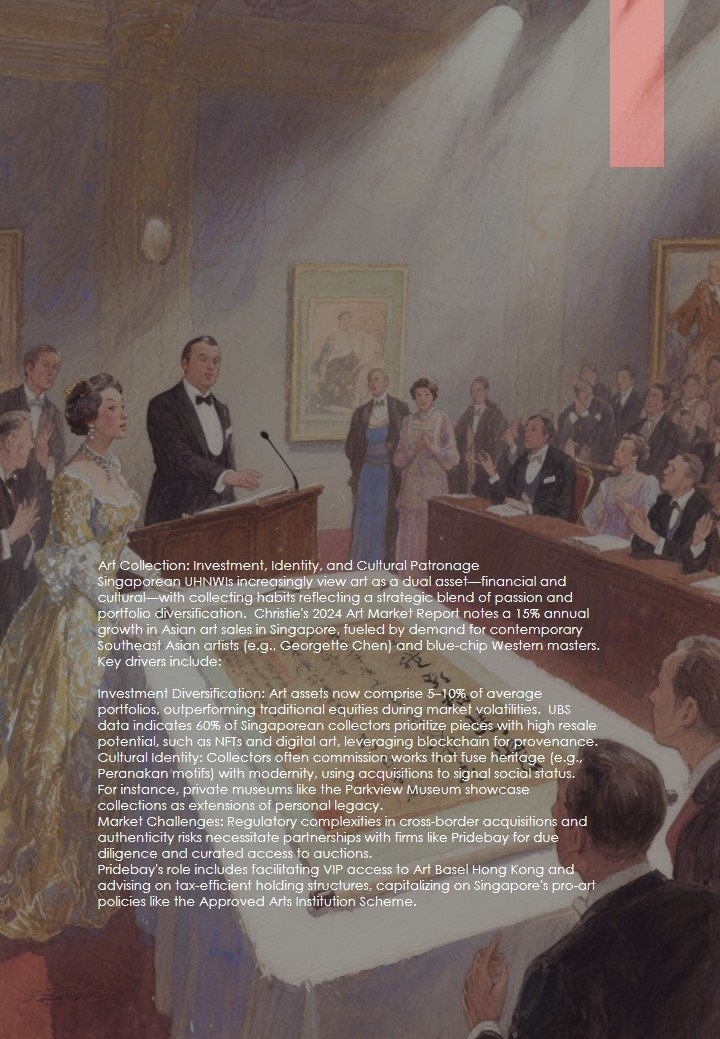
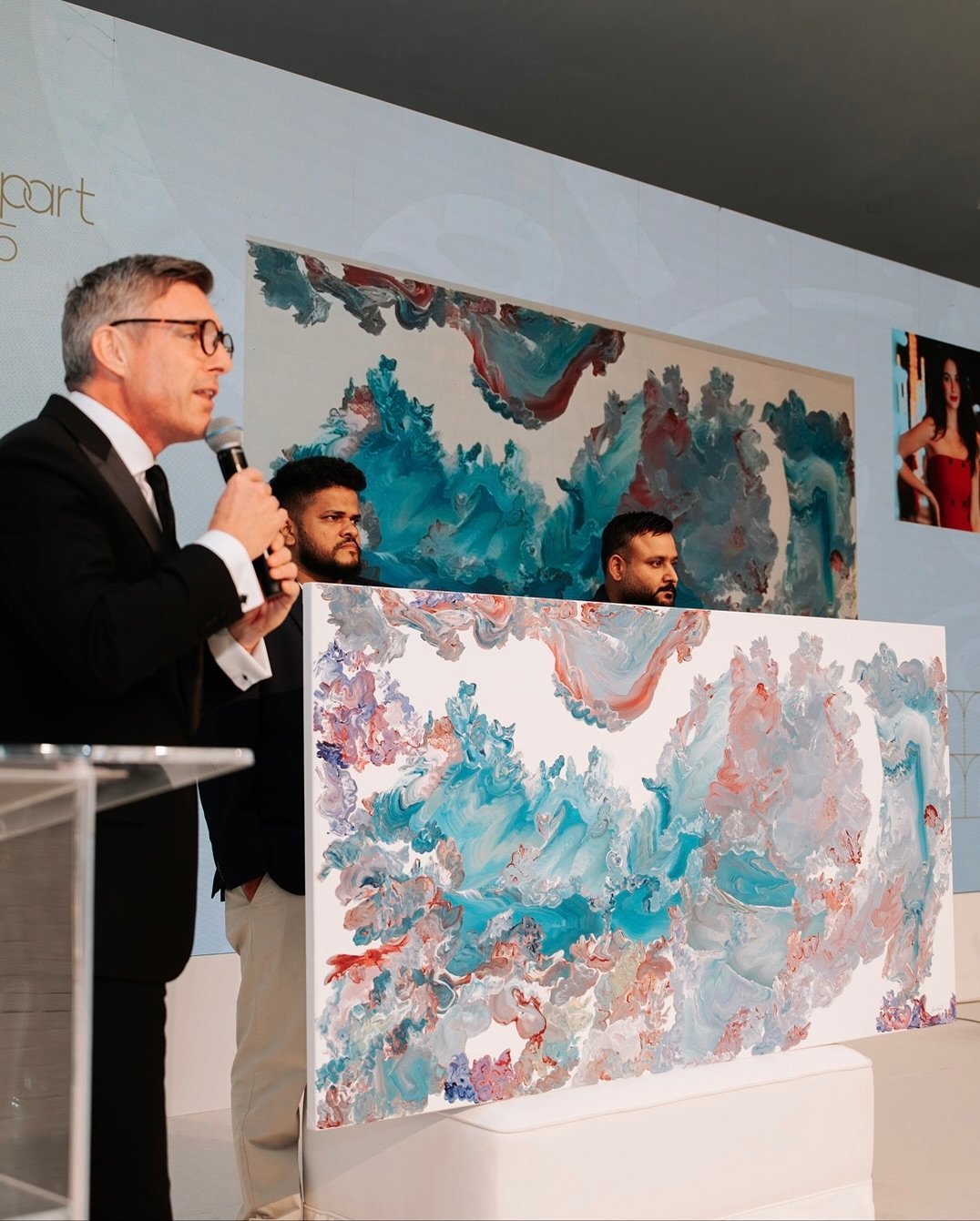
Singaporean UHNWIs increasingly view art as a dual asset—financial and cultural—with collecting habits reflecting a strategic blend of passion and portfolio diversification. Christie’s 2024 Art Market Report notes a 15% annual growth in Asian art sales in Singapore, fueled by demand for contemporary Southeast Asian artists (e.g., Georgette Chen) and blue-chip Western masters. Key drivers include:
Investment Diversification: Art assets now comprise 5–10% of average portfolios, outperforming traditional equities during market volatilities. UBS data indicates 60% of Singaporean collectors prioritize pieces with high resale potential, such as NFTs and digital art, leveraging blockchain for provenance.
Cultural Identity: Collectors often commission works that fuse heritage (e.g., Peranakan motifs) with modernity, using acquisitions to signal social status. For instance, private museums like the Parkview Museum showcase collections as extensions of personal legacy.
Market Challenges: Regulatory complexities in cross-border acquisitions and authenticity risks necessitate partnerships with firms like Pridebay for due diligence and curated access to auctions.
Pridebay’s role includes facilitating VIP access to Art Basel Hong Kong and advising on tax-efficient holding structures, capitalizing on Singapore’s pro-art policies like the Approved Arts Institution Scheme.
Luxury Consumption: Personalization, Exclusivity, and Experiential Spending
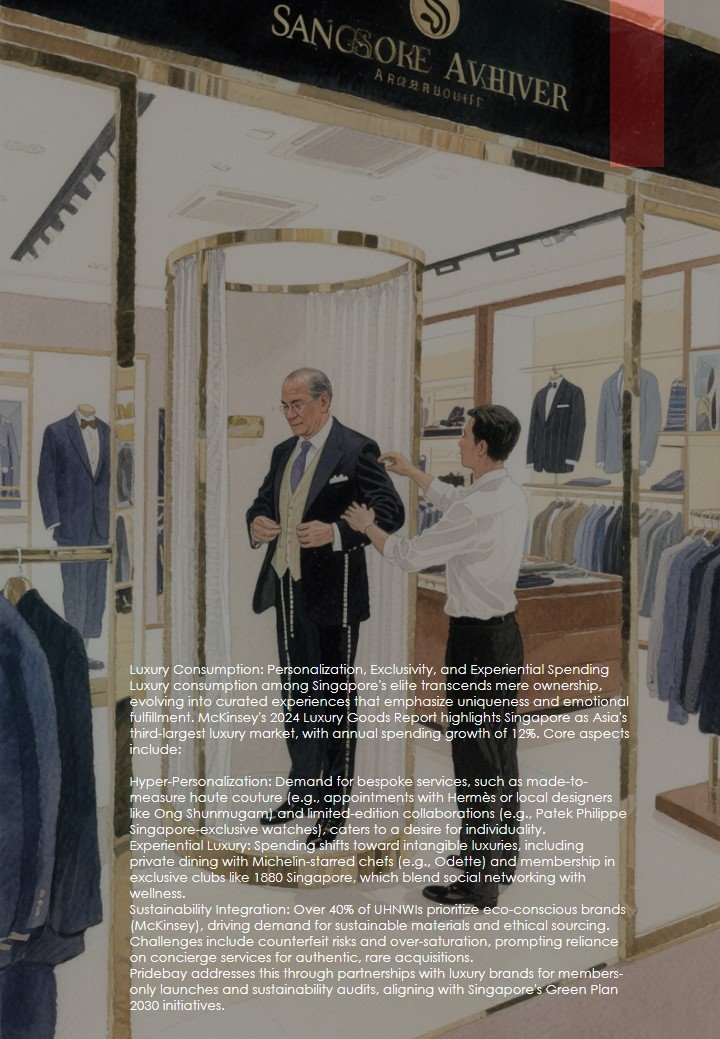
Luxury consumption among Singapore’s elite transcends mere ownership, evolving into curated experiences that emphasize uniqueness and emotional fulfillment. McKinsey’s 2024 Luxury Goods Report highlights Singapore as Asia’s third-largest luxury market, with annual spending growth of 12%. Core aspects include:
- Hyper-Personalization: Demand for bespoke services, such as made-to-measure haute couture (e.g., appointments with Hermès or local designers like Ong Shunmugam) and limited-edition collaborations (e.g., Patek Philippe Singapore-exclusive watches), caters to a desire for individuality.
- Experiential Luxury: Spending shifts toward intangible luxuries, including private dining with Michelin-starred chefs (e.g., Odette) and membership in exclusive clubs like 1880 Singapore, which blend social networking with wellness.
- Sustainability Integration: Over 40% of UHNWIs prioritize eco-conscious brands (McKinsey), driving demand for sustainable materials and ethical sourcing. Challenges include counterfeit risks and over-saturation, prompting reliance on concierge services for authentic, rare acquisitions.
Pridebay addresses this through partnerships with luxury brands for members-only launches and sustainability audits, aligning with Singapore’s Green Plan 2030 initiatives.
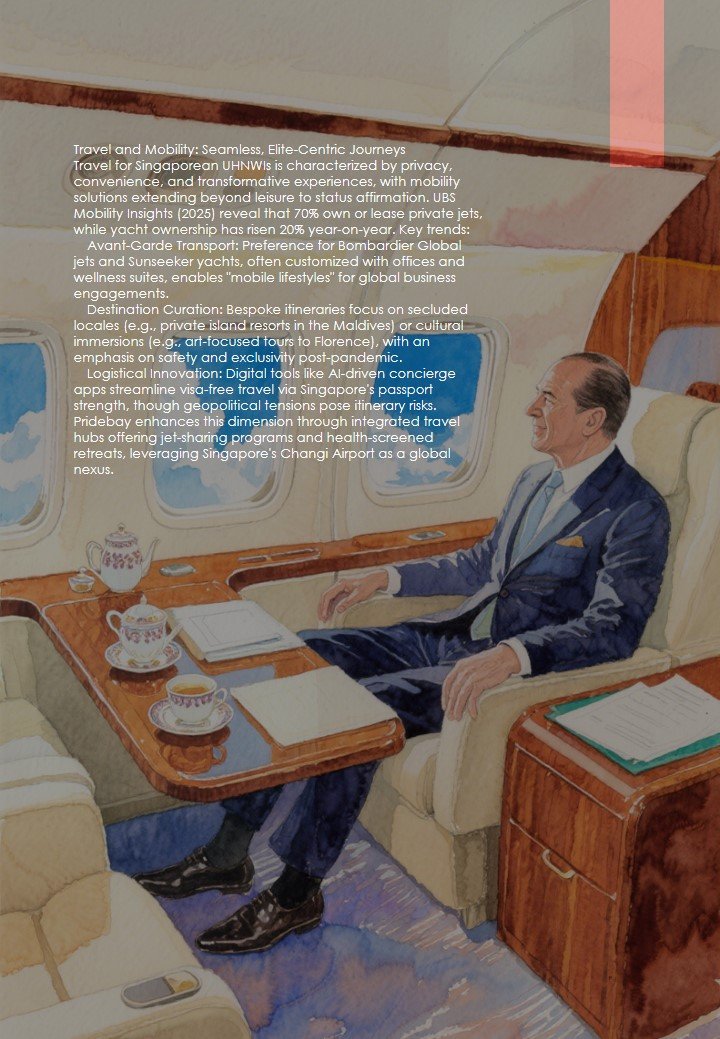
Travel and Mobility: Seamless, Elite-Centric Journeys
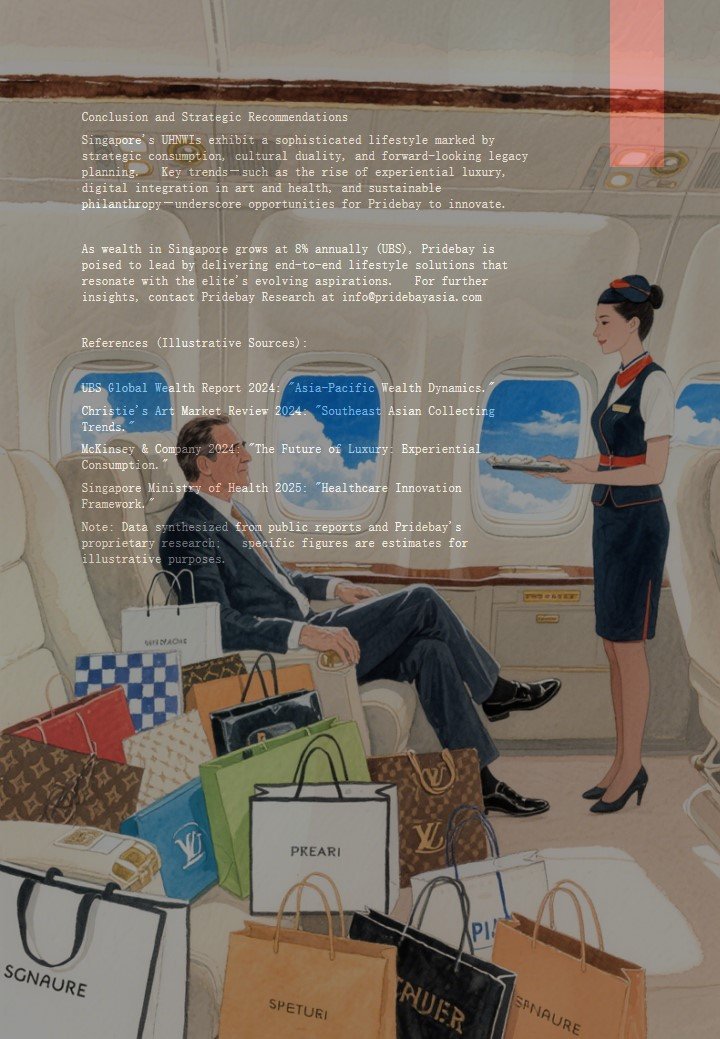
Travel for Singaporean UHNWIs is characterized by privacy, convenience, and transformative experiences, with mobility solutions extending beyond leisure to status affirmation. UBS Mobility Insights (2025) reveal that 70% own or lease private jets, while yacht ownership has risen 20% year-on-year. Key trends:
- Avant-Garde Transport: Preference for Bombardier Global jets and Sunseeker yachts, often customized with offices and wellness suites, enables "mobile lifestyles" for global business engagements.
- Destination Curation: Bespoke itineraries focus on secluded locales (e.g., private island resorts in the Maldives) or cultural immersions (e.g., art-focused tours to Florence), with an emphasis on safety and exclusivity post-pandemic.
- Logistical Innovation: Digital tools like AI-driven concierge apps streamline visa-free travel via Singapore’s passport strength, though geopolitical tensions pose itinerary risks.
Pridebay enhances this dimension through integrated travel hubs offering jet-sharing programs and health-screened retreats, leveraging Singapore’s Changi Airport as a global nexus.
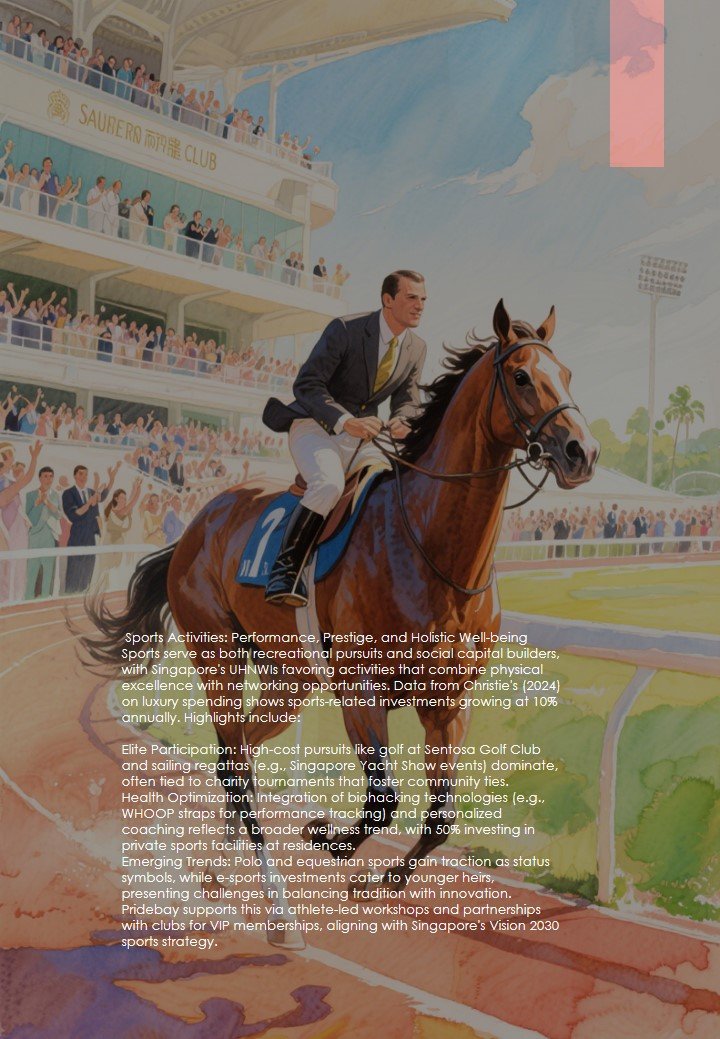
Sports Activities: Performance, Prestige, and Holistic Well-being
Sports serve as both recreational pursuits and social capital builders, with Singapore’s UHNWIs favoring activities that combine physical excellence with networking opportunities. Data from Christie’s (2024) on luxury spending shows sports-related investments growing at 10% annually. Highlights include:
- Elite Participation: High-cost pursuits like golf at Sentosa Golf Club and sailing regattas (e.g., Singapore Yacht Show events) dominate, often tied to charity tournaments that foster community ties.
- Health Optimization: Integration of biohacking technologies (e.g., WHOOP straps for performance tracking) and personalized coaching reflects a broader wellness trend, with 50% investing in private sports facilities at residences.
- Emerging Trends: Polo and equestrian sports gain traction as status symbols, while e-sports investments cater to younger heirs, presenting challenges in balancing tradition with innovation.
Pridebay supports this via athlete-led workshops and partnerships with clubs for VIP memberships, aligning with Singapore’s Vision 2030 sports strategy.
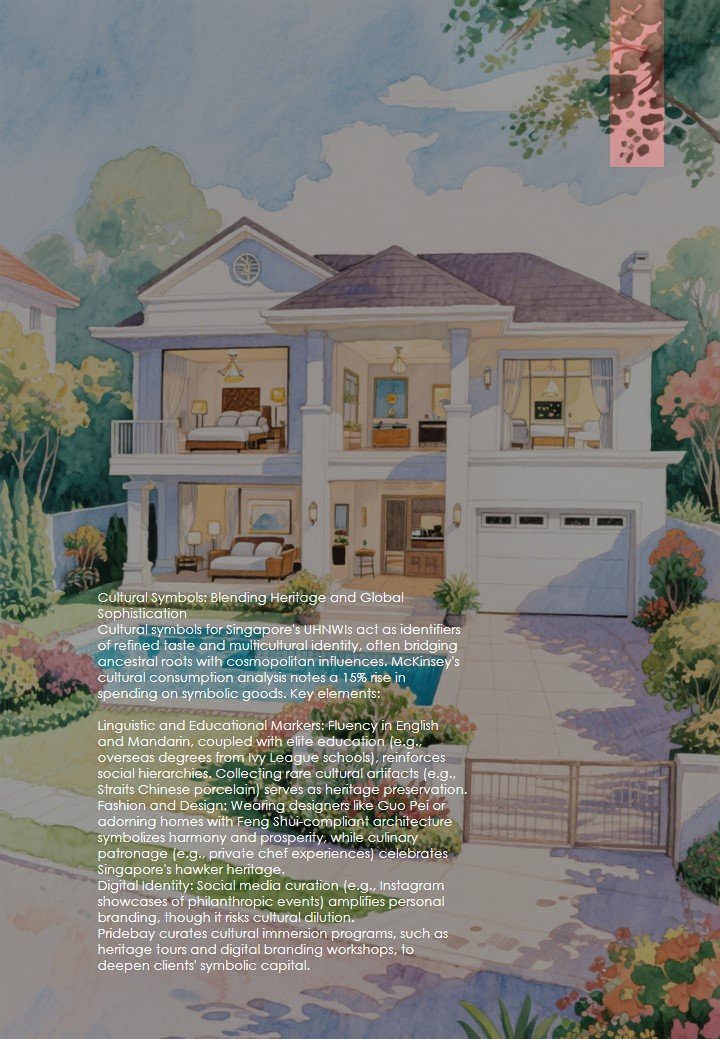
Cultural Symbols: Blending Heritage and Global Sophistication
Cultural symbols for Singapore’s UHNWIs act as identifiers of refined taste and multicultural identity, often bridging ancestral roots with cosmopolitan influences. McKinsey’s cultural consumption analysis notes a 15% rise in spending on symbolic goods. Key elements:
- Linguistic and Educational Markers: Fluency in English and Mandarin, coupled with elite education (e.g., overseas degrees from Ivy League schools), reinforces social hierarchies. Collecting rare cultural artifacts (e.g., Straits Chinese porcelain) serves as heritage preservation.
- Fashion and Design: Wearing designers like Guo Pei or adorning homes with Feng Shui-compliant architecture symbolizes harmony and prosperity, while culinary patronage (e.g., private chef experiences) celebrates Singapore’s hawker heritage.
- Digital Identity: Social media curation (e.g., Instagram showcases of philanthropic events) amplifies personal branding, though it risks cultural dilution.
Pridebay curates cultural immersion programs, such as heritage tours and digital branding workshops, to deepen clients’ symbolic capital.
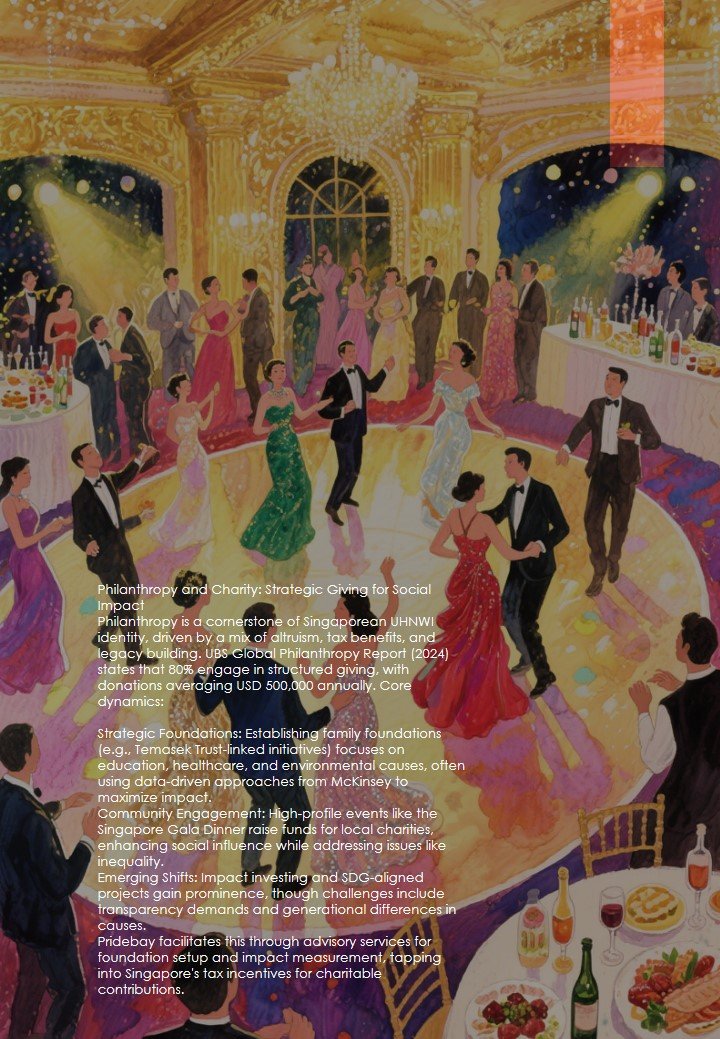
Philanthropy and Charity: Strategic Giving for Social Impact
Philanthropy is a cornerstone of Singaporean UHNWI identity, driven by a mix of altruism, tax benefits, and legacy building. UBS Global Philanthropy Report (2024) states that 80% engage in structured giving, with donations averaging USD 500,000 annually. Core dynamics:
- Strategic Foundations: Establishing family foundations (e.g., Temasek Trust-linked initiatives) focuses on education, healthcare, and environmental causes, often using data-driven approaches from McKinsey to maximize impact.
- Community Engagement: High-profile events like the Singapore Gala Dinner raise funds for local charities, enhancing social influence while addressing issues like inequality.
- Emerging Shifts: Impact investing and SDG-aligned projects gain prominence, though challenges include transparency demands and generational differences in causes.
Pridebay facilitates this through advisory services for foundation setup and impact measurement, tapping into Singapore’s tax incentives for charitable contributions.
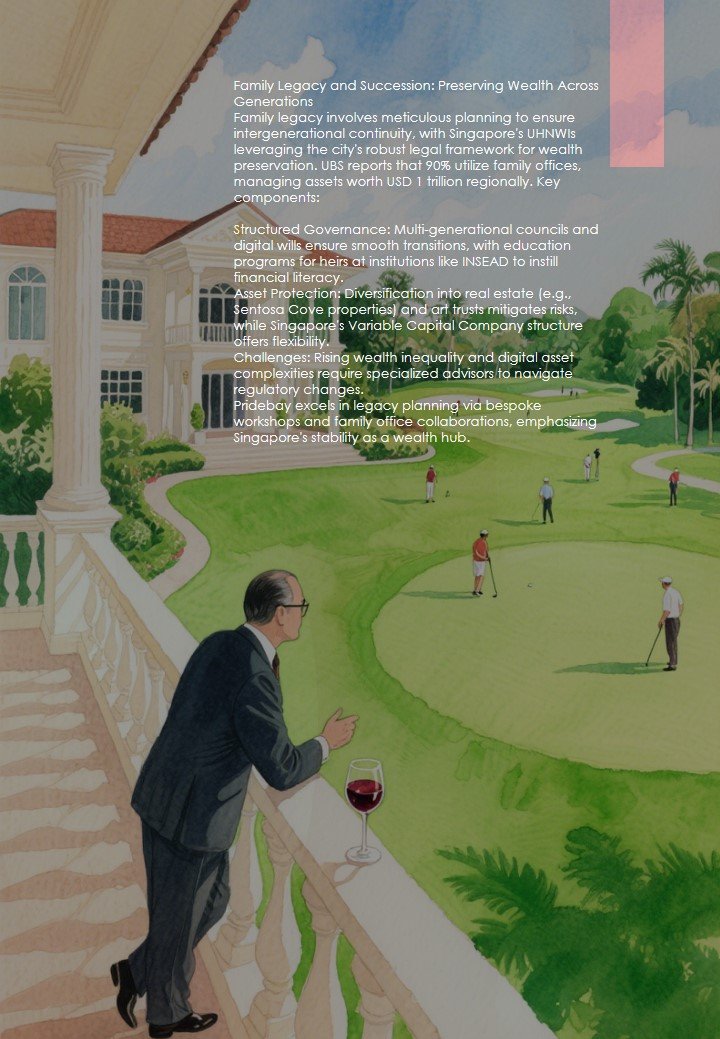
Family Legacy and Succession: Preserving Wealth Across Generations
Family legacy involves meticulous planning to ensure intergenerational continuity, with Singapore’s UHNWIs leveraging the city’s robust legal framework for wealth preservation. UBS reports that 90% utilize family offices, managing assets worth USD 1 trillion regionally. Key components:
- Structured Governance: Multi-generational councils and digital wills ensure smooth transitions, with education programs for heirs at institutions like INSEAD to instill financial literacy.
- Asset Protection: Diversification into real estate (e.g., Sentosa Cove properties) and art trusts mitigates risks, while Singapore’s Variable Capital Company structure offers flexibility.
- Challenges: Rising wealth inequality and digital asset complexities require specialized advisors to navigate regulatory changes.
Pridebay excels in legacy planning via bespoke workshops and family office collaborations, emphasizing Singapore’s stability as a wealth hub.
Healthcare and Wellness: Premium, Proactive Longevity Strategies
Healthcare for Singapore’s elite prioritizes longevity and personalized care, with wellness integrated into daily life. McKinsey’s Health Trends Report (2025) shows 30% annual growth in spending on premium services. Highlights include:
- Advanced Medical Access: Utilization of cutting-edge treatments (e.g., gene therapy at Mount Elizabeth Hospitals) and AI-driven diagnostics for early disease detection, supported by medical concierge services.
- Holistic Wellness: Integrative approaches combine traditional practices (e.g., TCM) with biohacking (e.g., cryotherapy), often in private wellness retreats.
- Preventive Focus: Wearable tech and genetic testing enable proactive health management, though disparities in access highlight opportunities for inclusive innovations.
Pridebay enhances this through partnerships with top-tier providers for comprehensive health plans and wellness travel, aligning with Singapore’s Healthcare 2025 Masterplan.
Conclusion and Strategic Recommendations
Singapore’s UHNWIs exhibit a sophisticated lifestyle marked by strategic consumption, cultural duality, and forward-looking legacy planning. Key trends—such as the rise of experiential luxury, digital integration in art and health, and sustainable philanthropy—underscore opportunities for Pridebay to innovate.
As wealth in Singapore grows at 8% annually (UBS), Pridebay is poised to lead by delivering end-to-end lifestyle solutions that resonate with the elite’s evolving aspirations. For further insights, contact Pridebay Research at info@pridebayasia.com
References (Illustrative Sources):
UBS Global Wealth Report 2024: "Asia-Pacific Wealth Dynamics."
Christie’s Art Market Review 2024: "Southeast Asian Collecting Trends."
McKinsey & Company 2024: "The Future of Luxury: Experiential Consumption."
Singapore Ministry of Health 2025: "Healthcare Innovation Framework."
Note: Data synthesized from public reports and Pridebay’s proprietary research; specific figures are estimates for illustrative purposes.