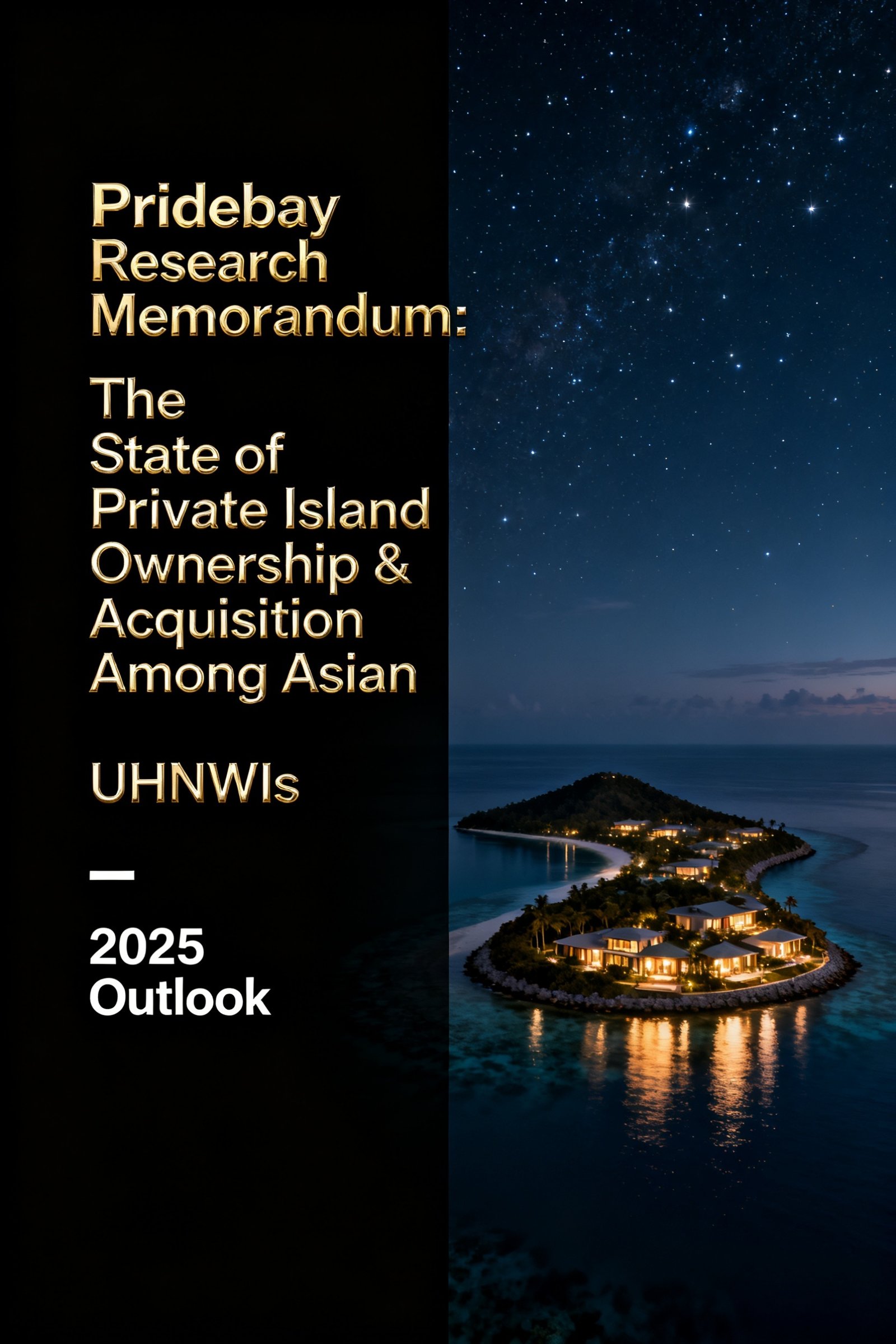
Pridebay Research Memorandum: The State of Private Island Ownership & Acquisition Among Asian UHNWIs – 2025 Outlook
To: Executive Leadership, Pridebay
From: Elite Research Analyst
Date: October 26, 2023
Subject: Strategic Insights into the 2025 Asian UHNWI Private Island Market
This report provides a strategic analysis of private island ownership and acquisition trends among Asia’s ultra-high-net-worth individuals (UHNWIs) as we approach 2025. It synthesizes market dynamics, key motivations, and emerging trends to inform Pridebay’s positioning and service development for our clientele.
Sub-Theme 1: Market Demand & Geographic Preferences
- Definition: Analysis of the driving forces behind the demand for private islands and the preferred locations for acquisition by Asian UHNWIs.
- Key Facts & Trends:
- Resilient Demand: Despite global economic headwinds, demand for ultra-luxury real estate, including private islands, remains robust among Asian UHNWIs. The desire for ultimate privacy, security, and unique legacy assets continues to be a primary driver.
- Southeast Asia & the Indian Ocean as Prime Destinations: While the Caribbean and South Pacific remain popular, Southeast Asia (e.g., Indonesia, Philippines) and the Indian Ocean (e.g., Maldives, Seychelles) are increasingly favored due to their proximity to major Asian hubs, favorable investment climates, and stunning natural beauty. The Maldives, in particular, has seen a surge in interest for curated, high-end island developments.
- "Second Home" Strategy: Many Asian UHNWIs view private islands as a strategic component of a diversified global property portfolio, often as a "second home" or a multi-generational retreat, rather than a primary residence.
- Debates:
- Sustainability vs. Exclusivity: There is a growing tension between the desire for untouched, pristine locations and the environmental impact of development and ownership. Some UHNWIs are prioritizing sustainability and conservation, while others seek maximum development potential.
- Geopolitical Risk: Proximity to home is a double-edged sword. While it offers convenience, it can also expose owners to regional political or economic instability, making truly remote locations in stable jurisdictions more attractive to some.
Sub-Theme 2: Acquisition Models & Investment Structures
- Definition: Examination of the various ways Asian UHNWIs acquire and structure ownership of private islands.
- Key Facts & Trends:
- Beyond Simple Purchase: The market is moving beyond straightforward freehold purchases. Common structures include long-term leases, joint ventures with developers, and investment through private trusts or family offices for enhanced privacy and estate planning.
- Developer-Partnered Acquisitions: A significant trend is the rise of "turnkey" islands developed by luxury property firms. UHNWIs partner with developers to co-create bespoke islands, sharing in the vision and development process. This model reduces risk and leverages developer expertise.
- Fractional Ownership (Emerging): While less common for a "private" island, the concept of fractional ownership in ultra-luxury island resorts or estates is gaining traction, allowing access to island luxury at a lower capital outlay.
- Debates:
- Control vs. Convenience: A fully custom-built island offers ultimate control but comes with high costs and long timelines. A developer-partnered or pre-built island offers speed and convenience but may involve compromises on design.
- Liquidity Concerns: Private islands are notoriously illiquid assets. The debate centers on whether they are a sound financial investment or purely a passion asset. Most Asian UHNWIs prioritize the latter, viewing the island as a priceless family legacy.
Sub-Theme 3: Motivations & Lifestyle Integration
- Definition: Understanding the core motivations behind island ownership and how these assets are integrated into the UHNWI lifestyle.
- Key Facts & Trends:
- Privacy and Security as Paramount: In an age of digital exposure, the primary motivation is often the unparalleled privacy and security a private island provides. It is a sanctuary from public scrutiny and a secure environment for family.
- Legacy and Philanthropy: Islands are increasingly seen as a vehicle for legacy building. UHNWIs are incorporating conservation efforts, sustainable development, and community support into their island projects, aligning ownership with personal values.
- Curated Experiences: The island is not just a property; it is a platform for curated experiences—hosting intimate gatherings of other elite peers, family reunions, or wellness retreats. This aligns perfectly with Pridebay’s core social and connection management services.
- Debates:
- Utilization vs. Status Symbol: A significant number of purchased islands remain underutilized, functioning more as a status symbol or financial store of value than a lived-in retreat. The most valuable clients are those who actively integrate the island into their lifestyle.
- Family vs. Personal Use: The balance between creating a multi-generational family haven and a personal escape for the primary owner can be a point of discussion within families.
Sub-Theme 4: Regulatory & Environmental Challenges
- Definition: The legal, environmental, and logistical hurdles associated with private island ownership.
- Key Facts & Trends:
- Complex Regulatory Landscapes: Acquiring and developing an island involves navigating complex local regulations, zoning laws, environmental impact assessments, and foreign ownership restrictions. This requires expert legal and local knowledge.
- Rising Environmental Scrutiny: Governments and local communities are increasingly vigilant about the environmental impact of development. Sustainable building practices and environmental stewardship are no longer optional but essential for project approval and social license to operate.
- Operational Complexity: Maintaining an island requires significant resources—a dedicated management team, reliable supply chains, and robust infrastructure for power, water, and communication.
- Debates:
- Development Rights vs. Conservation: This is the central conflict. How much can an owner develop their island before it loses its natural appeal or harms the ecosystem? Finding the right balance is critical.
- Cost of Ownership: The ongoing operational costs (staff, maintenance, utilities, security) can far exceed the initial purchase price, creating a significant long-term financial commitment.
Recommended Resources for Further Reading
- Knight Frank The Wealth Report 2024: The definitive annual report on global wealth, including sections on luxury real estate trends, UHNWI investment behavior, and regional market analysis. Focus: Macro trends in UHNWI property investment.
- Sotheby’s International Realty – "Private Islands: The Ultimate Luxury Asset" (Market Report): A specialized report from a leading luxury real estate firm providing data on private island sales, pricing, and popular locations. Focus: Market data and transaction trends.
- "The Billionaire’s Oyster: Private Islands and the New Gilded Age" by Alexandra Wolfe: A journalistic exploration of the world of private island ownership, offering insights into the motivations and lifestyles of the owners. Focus: Qualitative understanding of owner psychology.
- Maldives Ministry of Tourism – Investment Guidelines: Official government documentation outlining the legal and regulatory framework for foreign investment in tourism and real estate in the Maldives, a key market. Focus: Regulatory environment for a prime location.
- Pridebay Internal Research: "UHNWI Lifestyle & Aspirations in Asia 2024": Our proprietary research on the evolving needs, values, and spending patterns of our core clientele. Focus: Direct client insights and validation.
Smart Summary: 5 Key Takeaways for the CEO
- Demand is Driven by Privacy & Legacy: For Asian UHNWIs, private islands are less about real estate and more about securing ultimate privacy and building a lasting family legacy.
- Southeast Asia & Indian Ocean are Hotspots: Proximity and natural beauty make the Maldives, Indonesia, and the Seychelles the most sought-after regions, with the Maldives leading in high-end development.
- The Market is Evolving Beyond Simple Purchase: Turnkey developments and strategic partnerships with luxury developers are becoming the preferred acquisition model, offering a balance of customization and convenience.
- Sustainability is No Longer Optional: Environmental responsibility is a critical factor in project approval and social acceptance. Clients who integrate conservation into their vision are the future of the market.
- It’s About the Experience, Not Just the Asset: The true value lies in how the island is used—curating exclusive gatherings and family experiences—which creates a powerful synergy with Pridebay’s social and connection management services.