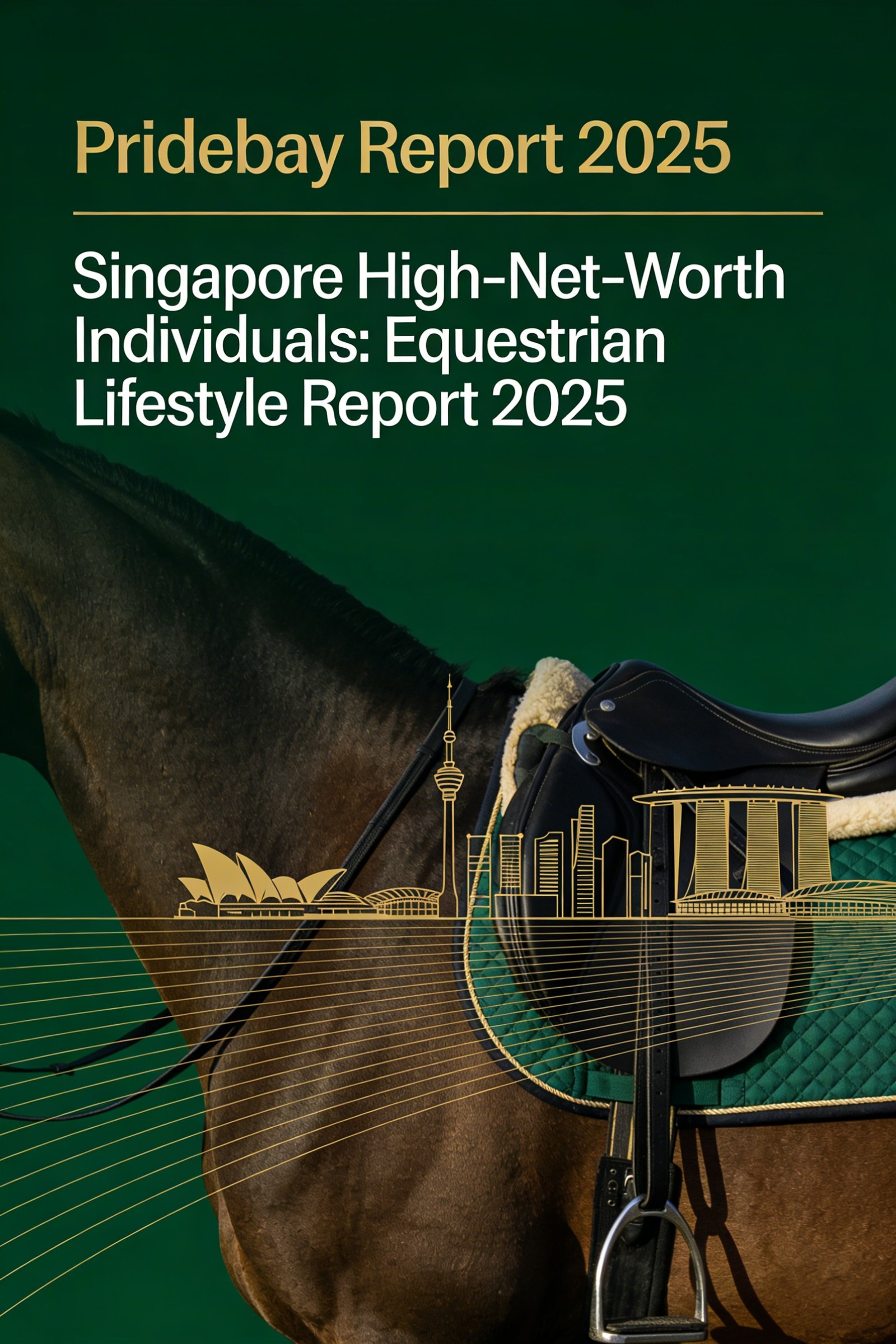
Singapore High-Net-Worth Individuals: Equestrian Lifestyle Report 2025
Published by Pridebay – Asia’s Leading High-Net-Worth Lifestyle Research Institution
Executive Summary
Equestrianism has evolved into a defining pillar of Singapore’s high-net-worth (HNW) lifestyle, blending sport, social prestige, and wellness in a market uniquely shaped by the city-state’s wealth concentration and limited land resources. As of 2025, Singapore’s equestrian market has reached approximately SGD 7.8 billion (US$5.8 billion), accounting for 15% of the national sports industry and projected to maintain steady growth driven by rising affluent populations and government support for premium sports tourism.
This report reveals that HNWIs (net worth ≥ US$1 million) and ultra-high-net-worth individuals (UHNWIs, net worth ≥ US$30 million) drive 85% of equestrian-related spending, with participation centered on private club memberships, professional training, competitive events, and luxury equine care. Key trends include the convergence of equestrianism with family bonding, the rise of experiential equine tourism, and growing demand for premium, personalized services—from bespoke training programs to organic equine supplements. Despite land scarcity and high operational costs, Singapore’s equestrian ecosystem thrives as a status symbol and lifestyle choice, with exclusive clubs like Singapore Polo Club serving as social hubs for the city-state’s elite. As Asia Pacific is set to account for 47.5% of new global UHNWIs by 2028, Singapore’s equestrian lifestyle is poised to strengthen its position as a marker of refined, affluent living.
1. Market Context: Singapore’s HNWI Landscape & Equestrian Ecosystem
1.1 HNWI Demographics & Spending Foundation
Singapore’s affluent population forms the core of its equestrian market, with distinct characteristics shaping participation:
- Wealth Concentration: As a global wealth hub, Singapore is home to a growing cohort of HNWIs and UHNWIs, dominated by family office principals, tech entrepreneurs, finance leaders, and expatriate executives. Their wealth, derived from finance, real estate, technology, and international trade, supports discretionary spending on status-driven lifestyle assets like equestrian memberships.
- Spending Trajectory: Singaporean HNWIs allocate 2-4% of annual discretionary income to equestrian activities, with average annual expenditures exceeding SGD 50,000 per household. This includes club subscriptions, training fees, horse ownership or boarding costs, and participation in local and international events—reflecting their prioritization of exclusive, experiential luxury.
1.2 Equestrian Market Dynamics in Singapore
The market’s unique structure is shaped by scarcity, policy support, and evolving preferences:
- Supply-Side Constraints & Exclusivity: With limited land, Singapore’s equestrian infrastructure is highly curated, comprising approximately 20 private clubs and training centers concentrated in premium districts like Bukit Timah and Pasir Ris. This scarcity inherently restricts access, reinforcing equestrianism’s status as an elite pursuit—aligning with HNWIs’ desire for differentiated social capital.
- Policy & Tourism Synergy: Government initiatives to promote sports tourism and premium lifestyle experiences have boosted the equestrian sector, with events attracting international riders and spectators while positioning Singapore as a regional hub for equine sports. Support for animal welfare regulations and veterinary infrastructure further enhances the market’s credibility.
- Segment Diversification: The market has expanded beyond traditional competitive equestrianism (dressage, show jumping) to include leisure riding, family-friendly programs, and equine therapy—catering to broader lifestyle needs while maintaining its premium positioning.
2. Equestrian Ecosystem: Clubs, Facilities & Services
2.1 Core Venues & Membership Models
Singapore’s equestrian landscape is defined by tiered, exclusive venues catering to different affluent segments:
- Ultra-Exclusive Private Clubs: Flagship venues like Singapore Polo Club (SPC) set the benchmark for elite equestrian socializing, with monthly subscriptions ranging from SGD 165.68 (single) to SGD 244.16 (family) and corporate membership entrance fees up to SGD 30,000. These clubs offer VIP amenities—including fine dining, event spaces, and private stables—with membership viewed as a gateway to high-net-worth networks.
- Premium Training Centers: Gallop Stable, Singapore’s largest equestrian facility with three locations, balances accessibility with luxury, offering pay-as-you-go lessons (SGD 70-300) and private coaching (up to SGD 1,000) alongside event hosting (weddings, corporate retreats). It caters to both seasoned riders and families new to equestrianism.
- Government-Supported Facilities: The National Equestrian Centre provides subsidized courses (SGD 640 for 8 lessons for locals) and youth programs, serving as a entry point for affluent families introducing children to the sport via school CCA partnerships.
2.2 Key Services & Value Chains
Equestrian-related spending extends across a specialized luxury ecosystem:
- Training & Coaching: Private, one-on-one sessions with certified instructors are the preferred format, with top coaches commanding SGD 200-500 per hour. Many HNWIs engage international trainers for competitive preparation or personalized skill development.
- Equine Care & Nutrition: The Singapore equine supplement market is valued at US$1.2 billion in 2025, with 6.2% CAGR growth driven by demand for premium organic and personalized formulations. Horse ownership (a status marker for UHNWIs) includes boarding (SGD 1,500-3,000/month), veterinary care, and custom nutrition plans.
- Events & Experiences: Local 赛事 (organised by the Singapore Equestrian Federation) and international showcases attract HNW participants and spectators, while niche offerings like equestrian retreats at Riders Lodge (2-3 day 训练营) blend sport with leisure.
3. HNWI Consumption Patterns: Equestrian Lifestyle
3.1 Participation Drivers & Motivations
Singaporean HNWIs’ engagement with equestrianism is fueled by interconnected social, emotional, and status-related factors:
- Social Capital & Networking (35% of participation): Equestrian clubs serve as exclusive social hubs where HNWIs connect with peers, clients, and industry leaders. Events like polo matches and club galas facilitate relationship-building in a refined, low-pressure setting.
- Family Bonding & Legacy (25% of participation): Affluent families view equestrianism as a shared activity that promotes discipline and confidence in children. Many enroll kids in pony programs (e.g., National Equestrian Centre’s Pony Playground for 3-6-year-olds) and participate in family riding sessions.
- Status & Lifestyle Expression (20% of participation): In Singapore’s competitive elite circles, equestrian memberships and participation signal “old money” refinement and global sophistication—distinct from more overt luxury displays.
- Wellness & Escape (20% of participation): The sport offers a rare blend of physical activity and mental relaxation, providing a respite from urban density and high-pressure careers. Riding is valued for its stress-reducing benefits and connection to nature.
3.2 Behavioral Trends & Preferences
HNWI equestrian behavior reflects a shift toward personalized, experiential luxury:
- Membership vs. Ownership: Most HNWIs opt for club memberships (90%) over horse ownership (10%), due to high maintenance costs and time constraints. Ownership is primarily limited to UHNWIs who view horses as collectible assets or competitive partners.
- Age & Gender Dynamics: Participation is evenly split between genders, with younger HNWIs (35-45) prioritizing leisure riding and social events, while older cohorts (55+) focus on competitive equestrianism and club governance. Children of HNWIs form the fastest-growing segment, driven by family legacy and extracurricular development.
- Digital Integration: While core experiences (riding, training) remain offline, HNWIs use digital platforms for lesson booking, horse health monitoring, and accessing exclusive event invitations—valuing convenience without compromising on personalization.
4. Key Market Drivers & Future Trends (2025-2030)
4.1 Growth Catalysts
- HNWI Influx: Asia Pacific’s projected dominance in global UHNWI growth will drive demand for exclusive equestrian experiences, as new wealth seeks established status symbols and social networks.
- Equestrian Tourism: Singapore’s positioning as a regional travel hub will boost inbound equine tourism, with international HNWIs combining business trips with riding vacations or tournament participation.
- Wellness Synergy: The growing focus on holistic health will elevate equestrianism’s appeal, as research links riding to improved posture, mindfulness, and mental wellbeing—aligning with HNW priorities.
4.2 Emerging Trends
- Tech-Enhanced Training: Adoption of virtual reality (VR) for skill practice and AI-driven horse health monitoring will grow, blending tradition with innovation to enhance performance and care.
- Sustainable Equestrianism: Demand for eco-friendly stabling, organic equine products, and carbon-neutral events will rise, reflecting HNWIs’ growing environmental consciousness.
- Bespoke Experiences: Customized travel packages (e.g., international polo tournaments with private hospitality) and personalized training programs will become key differentiators for clubs and service providers.
- Intergenerational Engagement: Clubs will expand multi-generational offerings—from teen competitive teams to senior leisure riding groups—to strengthen family loyalty and long-term membership retention.
4.3 Challenges
- Land & Cost Pressures: Scarcity of land will keep operational costs high, potentially limiting venue expansion and pushing membership fees upward.
- Market Niche Limitation: Equestrianism remains a niche pursuit, with limited mainstream appeal that could constrain broader market growth.
- Regulatory Compliance: Stricter animal welfare and environmental regulations will require clubs to invest in upgraded facilities, increasing operational complexity.
5. Strategic Implications for Stakeholders
5.1 Recommendations for Equestrian Clubs & Facilities
- Curate Exclusive Partnerships: Collaborate with luxury brands (watchmakers, private banks) and hospitality providers to create integrated experiences—e.g., polo match VIP lounges or equestrian-themed retreats.
- Enhance Family-Centric Offerings: Expand youth academies, parent-child riding programs, and family event spaces to tap into intergenerational engagement trends.
- Leverage Digital Tools: Develop a VVIP portal for members to access personalized training plans, horse health updates, and exclusive event previews—balancing convenience with exclusivity.
5.2 Recommendations for Luxury Brands & Service Providers
- Align with Status & Wellness: Position products (e.g., equine supplements, riding apparel) as symbols of both refinement and performance, emphasizing premium ingredients and craftsmanship.
- Sponsor Niche Events: Support high-profile equestrian tournaments or club galas to reach target HNWI audiences in a context that aligns with brand values.
5.3 Insights for Investors
- Target High-Growth Segments: Invest in equine supplement manufacturing (driven by 6.2% CAGR) and tech-enabled training solutions to capitalize on emerging trends.
- Club Infrastructure Upgrades: Fund eco-friendly facility renovations or specialized stabling to address regulatory demands and enhance member experience.
6. Conclusion
For Singapore’s HNWIs, equestrianism is far more than a sport—it is a multifaceted lifestyle that combines social networking, family bonding, wellness, and status expression. As the city-state’s affluent population grows and global wealth continues to concentrate in Asia Pacific, Singapore’s equestrian ecosystem is well-positioned to thrive, despite land constraints and niche market dynamics.
The future of equestrian lifestyle in Singapore will be defined by personalization, sustainability, and intergenerational engagement. Clubs and service providers that prioritize exclusivity, family-centricity, and tech-enabled convenience will capture the greatest value, while investors focusing on high-growth segments like premium equine care and digital training tools stand to benefit from the market’s steady expansion. Ultimately, equestrianism remains a timeless marker of refined affluence in Singapore, poised to retain its status as a core lifestyle choice for the city-state’s elite.
Data Sources: Singapore Equestrian Federation 2025 Annual Report, Knight Frank Wealth Report 2025, 丝路印象 Singapore Equestrian Market Analysis 2024-2025, Singapore Polo Club Membership Data 2025, Euromonitor International Luxury Lifestyle Report 2025