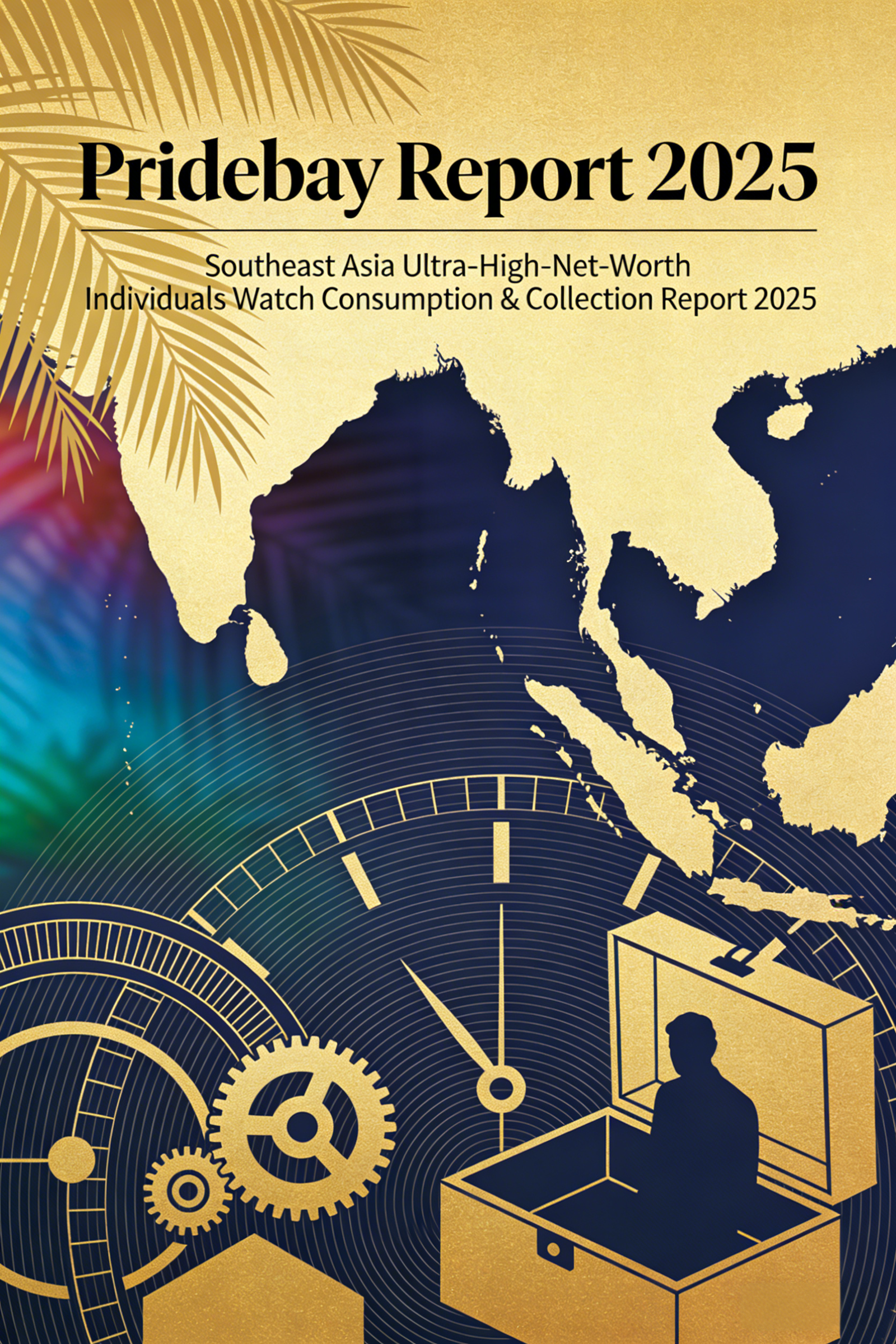
PRIDEBAY SOUTHEAST ASIA ULTRA HIGH NET WORTH INDIVIDUAL WATCH CONSUMPTION AND COLLECTION REPORT 2025
Chapter 1: Macroeconomic Foundations and the Resilience of Southeast Asian Wealth Hubs The economic landscape of Southeast Asia in 2025 serves as the primary catalyst for the unprecedented surge in horological investments among the region’s ultra high net worth individuals. As global markets grapple with varying degrees of volatility, the ASEAN-6 economies have demonstrated a robust collective gross domestic product growth rate of four point eight percent, underpinned by strong domestic consumption and a significant influx of foreign direct investment. Singapore continues to solidify its position as the preeminent wealth management capital of Asia, with the number of registered single-family offices surpassing one thousand eight hundred and forty units by the first quarter of 2025. This concentration of capital has created a highly sophisticated ecosystem where luxury watches are no longer viewed merely as discretionary purchases but as strategic hedges against currency fluctuations and inflationary pressures. In markets like Indonesia and Thailand, the rise of the ultra-wealthy class is closely correlated with the expansion of the technology and renewable energy sectors, resulting in a new cohort of collectors with substantial liquid assets. The Pridebay Wealth Index indicates that the average allocation toward passion assets within Southeast Asian portfolios has increased from seven percent in 2022 to eleven point five percent in 2025, with high-end timepieces capturing nearly forty percent of that specific segment. Furthermore, the regional integration facilitated by the Regional Comprehensive Economic Partnership has streamlined luxury logistics, allowing for more efficient cross-border acquisitions of rare pieces. Financial institutions in Jakarta, Bangkok, and Ho Chi Minh City are increasingly integrating horological valuation services into their private banking offerings, recognizing the inherent stability of the secondary watch market. The correlation between the regional equity markets and watch demand remains positive, yet the resilience of top-tier brands suggests a decoupling from short-term market noise. As capital flight from other regions seeks refuge in the stable political environments of Southeast Asia, the demand for portable, high-value assets has reached a historic zenith. This macroeconomic backdrop provides the necessary liquidity and confidence for collectors to engage in multi-million dollar acquisitions, fostering a competitive environment that rivals traditional centers like Geneva and Hong Kong. Pridebay research suggests that the total addressable market for haute horlogerie in Southeast Asia will expand at a compound annual growth rate of nine point two percent over the next thirty-six months, driven by the sustained wealth creation in the emerging billionaire corridors of the Mekong region. The stabilization of the Singapore Dollar and the Thai Baht has further incentivized local acquisitions, reducing the historical reliance on European boutiques for primary sourcing. This shift toward localized high-value consumption is a definitive marker of the region’s maturing financial identity and its burgeoning status as a global powerhouse in the luxury timepiece sector. Analysts observe that the velocity of wealth circulation within the Southeast Asian UHNWI segment is accelerating, with a particular emphasis on diversifying away from traditional real estate into highly liquid and recognizable luxury assets. Consequently, the horological market in 2025 is characterized by a unique blend of speculative interest and genuine connoisseurship, supported by a macroeconomic framework that prioritizes long-term value retention and generational wealth transfer through tangible excellence.
Chapter 2: Demographic Shifts and the Rise of the Next Generation Collector The profile of the Southeast Asian watch collector is undergoing a profound transformation as a significant portion of regional wealth transitions into the hands of the next generation. Approximately thirty-eight percent of the region’s ultra high net worth individuals are now under the age of forty-five, representing a demographic cohort that is Western-educated, digitally native, and highly discerning in their consumption patterns. These younger collectors are moving away from the overt brand signaling preferred by their predecessors, instead favoring a philosophy of quiet luxury and technical substance. Pridebay’s 2025 demographic survey reveals that seventy-two percent of millennial UHNWIs in the region prioritize historical significance and movement complexity over aesthetic prestige. This shift is particularly evident in the burgeoning collector communities of Manila and Kuala Lumpur, where digital platforms are used to curate private salons and educational forums. The influence of social media transparency has eliminated the information asymmetry that once characterized the luxury watch trade, empowering younger collectors to challenge traditional retail narratives and demand greater accountability from manufacturers. This generation is also more inclined to view watch collecting as a form of cultural participation rather than mere social climbing. They are increasingly drawn to independent watchmakers who offer a direct connection to the artisan, valuing the narrative of the creator as much as the product itself. The rise of the female collector is another pivotal demographic trend, with women now accounting for twenty-nine percent of the total UHNWI watch market in Southeast Asia, a twelve percent increase from 2023. These female collectors are rejecting the traditional jewelry-watch categorization, instead seeking out high-complication pieces such as tourbillons and perpetual calendars originally marketed toward men. The hybridization of work and leisure among this younger demographic has also influenced the types of watches being acquired, with a marked preference for versatile luxury sports watches that can transition seamlessly from a boardroom in Singapore to a private resort in Bali. Peer-to-peer influence within elite social circles remains a primary driver of acquisition, yet the criteria for status have shifted toward owning pieces that reflect an insider’s knowledge of horological history. This demographic evolution is forcing major brands to recalibrate their marketing strategies, moving away from celebrity endorsements toward partnership with respected scholars and master watchmakers. The integration of technology into the collecting experience, including the use of blockchain for provenance tracking, resonates deeply with this cohort’s demand for authenticity and security. As these younger individuals inherit family fortunes, their impact on the market is expected to intensify, with a projected forty-five percent of all high-value transactions in the region being initiated by individuals born after 1980 by the end of 2025. This suggests a long-term sustainability for the market, as the passion for horology is being successfully institutionalized within the next generation of Southeast Asian elites. The cultural capital associated with watch collecting has become a unifying language for the region’s young wealthy, bridging geographical gaps and creating a cohesive regional identity centered on the appreciation of mechanical art.
Chapter 3: Portfolio Diversification and the Financialization of Horology In the current financial climate of 2025, the Southeast Asian UHNWI community increasingly treats horology as a sophisticated asset class within a diversified investment portfolio. The volatility of traditional equity markets and the cooling of certain real estate sectors have driven capital toward alternative investments that offer both tangible utility and historical price appreciation. Watches from Tier 1 manufacturers, specifically those with limited annual production cycles, have demonstrated a low correlation with global stock indices, making them an attractive tool for risk mitigation. Pridebay’s financial analysis indicates that the top one hundred most desirable watch models have delivered an annualized return of thirteen point four percent over the past five years, significantly outperforming the MSCI ASEAN Index. This financialization of the hobby has led to the emergence of specialized horological investment funds based in Singapore and Bangkok, which allow individuals to pool capital to acquire museum-grade pieces. These funds employ professional curators and data analysts to track auction trends, production numbers, and brand health, providing a level of institutional rigor to what was once a purely emotional pursuit. However, the 2025 market is also seeing a pushback against pure speculation, with a renewed emphasis on the intrinsic value of craftsmanship. Collectors are now carefully distinguishing between hype-driven assets and those with genuine horological merit. The liquidity of the watch market in Southeast Asia is at an all-time high, supported by a network of reputable secondary dealers who provide instant valuations and buy-back guarantees. This liquidity is a crucial factor for UHNWIs who value the ability to rebalance their portfolios quickly. Asset-backed lending against watch collections is also becoming more common in the region’s private banking sector, with several major institutions now accepting high-value timepieces as collateral for short-term liquidity needs. This development further legitimizes the status of watches as a credible financial instrument. The Pridebay Investment Report notes that the most successful collectors are those who adopt a long-term horizon, focusing on pieces that are likely to remain relevant regardless of passing trends. This includes a heavy focus on vintage references with impeccable provenance and contemporary pieces from independent makers with restricted output. The concept of the "complete set"—original box, papers, and service history—is more critical than ever, with such examples commanding a thirty percent premium over loose pieces in the Southeast Asian market. The integration of horology into wealth management discussions reflects a broader trend of holistic asset planning, where lifestyle assets are managed with the same scrutiny as fixed-income or private equity holdings. As the infrastructure for watch valuation and authentication continues to improve, the barriers to entry for pure financial investors are lowering, further driving up demand for a finite supply of exceptional pieces. By the end of 2025, it is estimated that fifteen percent of the total value of Southeast Asian UHNWI watch collections will be held primarily for investment purposes, highlighting the deep-seated belief in the enduring value of mechanical excellence.
Chapter 4: Brand Hegemony and the Evolution of Artisan Independent Watchmaking While established marques such as Patek Philippe, Rolex, and Audemars Piguet continue to command the largest share of the Southeast Asian market, 2025 marks a significant pivot toward independent artisan watchmaking. The hegemony of the "Big Three" remains undisputed in terms of total volume and brand recognition, but the intellectual capital of the region’s elite collectors is increasingly being invested in names like F.P. Journe, Rexhep Rexhepi, and Kari Voutilainen. This shift is driven by a desire for exclusivity and a direct connection to the watchmaker, which large industrial brands struggle to provide. Pridebay’s market share analysis shows that while Rolex still captures fifty-two percent of the entry-to-mid UHNWI segment, the ultra-rare segment—defined as pieces costing over five hundred thousand dollars—is now forty percent dominated by independents. In Singapore and Thailand, specialized boutiques dedicated to independent brands have seen a sixty-five percent increase in foot traffic compared to 2023. These collectors are willing to endure five-year waiting lists for a piece that represents a unique horological philosophy rather than a mass-produced status symbol. The narrative of the "human touch" is particularly resonant in the post-AI era, where mechanical perfection achieved by hand is seen as the ultimate luxury. Furthermore, the technical innovations introduced by independents, such as resonance movements or experimental escapements, appeal to the engineering-focused minds of the region’s tech-wealthy elite. Established brands are responding to this challenge by re-emphasizing their own heritage and high-craft divisions, such as Vacheron Constantin’s Les Cabinotiers or Patek Philippe’s Rare Handcrafts collection. The competition for allocation of these limited-production pieces is intense, often requiring years of relationship-building between the collector and the brand’s regional management. The role of the authorized dealer is also evolving, with many transitioning into advisory roles that guide collectors through the complexities of the independent landscape. Pridebay research highlights that the secondary market prices for certain independent pieces in Southeast Asia now routinely exceed five times their original retail value, creating a virtuous cycle of demand and prestige. This independent renaissance is not limited to European makers; there is a growing interest in high-end Japanese horology and even emerging artisans within the ASEAN region who are beginning to gain international recognition. The diversification of brand interest is a healthy sign for the ecosystem, as it reduces the systemic risk associated with over-reliance on a few dominant players. However, the scarcity of these independent pieces means that they remain the province of only the most connected and persistent individuals. This exclusivity is exactly what reinforces their value in the eyes of the Southeast Asian UHNWI, who views the acquisition of an independent masterpiece as the pinnacle of their collecting journey. The tension between industrial luxury and artisanal horology is defining the aesthetic and technical direction of the market in 2025, leading to a richer and more varied landscape for all participants.
Chapter 5: Regional Consumption Patterns and Gateway City Dynamics The geographic distribution of watch consumption in Southeast Asia is characterized by a "hub and spoke" model, with Singapore acting as the primary gateway and surrounding cities developing unique local identities. Singapore remains the undisputed epicenter, accounting for forty-four percent of all high-value horological transactions in the region. The city-state’s tax-friendly environment, world-class retail infrastructure on Orchard Road, and its role as a regional financial hub make it the natural choice for UHNWIs from Indonesia, Malaysia, and Vietnam to conduct their acquisitions. However, Bangkok has emerged as a formidable secondary hub, with a collector community that is arguably the most passionate and knowledgeable in Asia. The Thai capital’s luxury malls, such as Gaysorn Village and Siam Paragon, have become centers for "watch tourism," attracting collectors with exclusive regional editions and high-profile exhibitions. Pridebay’s data indicates that Thai collectors have a particular affinity for vintage Rolex and Patek Philippe, with a deep appreciation for "neo-vintage" pieces from the 1990s. In Vietnam, the cities of Ho Chi Minh City and Hanoi are experiencing the fastest growth in luxury retail space, driven by a new class of industrial billionaires who are quickly climbing the horological learning curve. The Vietnamese market is characterized by a preference for highly visible, gem-set pieces and bold designs from brands like Richard Mille and Hublot. Meanwhile, Jakarta remains a powerhouse of consumption, though much of the actual purchasing by Indonesian UHNWIs still takes place in Singapore due to broader selection and perceived privacy. The Philippine market, centered in Manila, is seeing a resurgence in demand for classic complications, with a loyal base of multi-generational collectors who favor long-standing relationships with European houses. Pridebay identifies a trend of "regional decentralization," where brands are increasingly hosting intimate events in secondary cities like Surabaya, Penang, and Da Nang to cater to wealthy individuals who prefer local engagement. This localized approach is essential for building long-term brand loyalty in a region where personal relationships are paramount. The digital infrastructure of these gateway cities is also critical, with high-speed connectivity allowing collectors to participate in global auctions in real-time. Despite the growth of local markets, the "Singapore Premium" remains a factor, as many collectors believe that pieces sourced through Singaporean retailers carry a higher level of prestige and guaranteed authenticity. The flow of timepieces between these cities creates a dynamic regional secondary market, where pieces often move across borders as collectors trade and upgrade their holdings. This regional synergy is a key strength of the Southeast Asian market, providing a level of liquidity and variety that is difficult to replicate in more isolated luxury markets. As infrastructure improves and wealth continues to diffuse, Pridebay expects the gap between Singapore and the rest of the region to narrow slightly, though the city-state will maintain its leadership role as the region’s horological "central bank."
Chapter 6: The Gender Shift and the Expansion of the Female Haute Horlogerie Market One of the most significant developments in the 2025 Southeast Asian horological landscape is the emergence of female UHNWIs as a primary and highly sophisticated consumer segment. Historically, the female market was dominated by jewelry-centric timepieces where the horological movement was secondary to the carats of diamonds on the bezel. However, Pridebay’s recent survey of high-net-worth women in the region shows that sixty-four percent now actively seek out mechanical complications, with a specific interest in moon phases, tourbillons, and skeletons. This shift is driven by the increasing number of self-made female entrepreneurs and senior executives who view a high-end mechanical watch as a symbol of professional achievement and intellectual discernment. Brands like Audemars Piguet and Richard Mille have been at the forefront of this trend, offering gender-neutral or specifically feminine designs that do not compromise on technical integrity. The popularity of the Royal Oak and the RM 07-01 among Southeast Asian women has created a new aesthetic standard where "sporty chic" is preferred over traditional dress watches. Furthermore, female collectors are becoming increasingly active in the vintage and auction sectors, often competing for the same rare references as their male counterparts. This has led to a significant increase in the prices for mid-sized vintage pieces, such as the 36mm Patek Philippe references, which are now seen as perfectly proportioned for the modern female wrist. Pridebay research also highlights a growing trend of female-only watch clubs and communities in Singapore and Bangkok, where members share knowledge and facilitate private trades. These groups are often more focused on the educational aspects of horology than their male counterparts, with a strong emphasis on understanding the history and mechanics of the pieces. The impact of this shift on retail is profound, with boutiques redesigned to offer a more inclusive and less intimidating environment. Sales staff are being retrained to discuss calibers and power reserves with female clients, rather than just aesthetics. The "husband-gifting" model is rapidly being replaced by autonomous female purchasing, with seventy-eight percent of female UHNWI watch acquisitions in 2024 being self-funded. This financial independence is reshaping the market dynamics, as brands must now cater to a demographic that is often more demanding and better informed than the traditional male base. Pridebay predicts that by 2027, the female segment will account for nearly thirty-five percent of the total value of the haute horlogerie market in Southeast Asia. This expansion is not just a change in demographics but a change in the very nature of the products being successful, as it encourages brands to innovate in terms of size, ergonomics, and decorative techniques like enameling and engraving that appeal to a refined female sensibility. The convergence of male and female collecting tastes is leading to a more unified and vibrant market where the quality of the watch is the sole arbiter of value.
Chapter 7: Secondary Market Ecosystems and the Role of Auction Houses in Southeast Asia The secondary market for high-end timepieces in Southeast Asia has matured into a multi-billion dollar ecosystem that operates with a level of transparency and efficiency previously unseen. In 2025, the distinction between "new" and "pre-owned" has blurred, with UHNWIs viewing the secondary market as an essential venue for sourcing discontinued references and rare vintage pieces. Auction houses like Christie’s, Sotheby’s, and Phillips have significantly increased their physical presence in the region, hosting more frequent previews and dedicated "Southeast Asian Select" auctions. These events are not just commercial transactions but major social milestones for the collector community, serving as platforms for networking and knowledge exchange. Pridebay’s analysis of auction results from the 2024-2025 season shows that Southeast Asian bidders were responsible for twenty-two percent of the winning bids for lots exceeding one million dollars globally. This indicates a massive transfer of horological heritage into the region. Parallel to the global auction houses, a robust network of local secondary dealers has emerged, offering "concierge-level" services that include authentication, restoration, and portfolio management. These dealers often act as private brokers for UHNWIs who wish to acquire or divest pieces discreetly outside of the public auction arena. The rise of digital marketplaces specifically tailored for the high-end segment has further increased market liquidity. Platforms that utilize artificial intelligence to track global price trends and predict future value have become indispensable tools for the modern collector. Pridebay notes that the "grey market" of the past has been replaced by a "certified pre-owned" model, where the provenance and condition of every piece are meticulously documented. This professionalization of the secondary market has reduced the perceived risk of buying pre-owned, encouraging more UHNWIs to participate. The "flipping" culture of the 2020-2022 period has largely subsided, replaced by a more stable environment where prices reflect genuine scarcity and long-term desirability rather than short-term hype. However, the premium for "investment-grade" pieces continues to rise, as collectors compete for the limited number of watches that meet the highest standards of condition and rarity. The role of the collector as a "custodian" of history is a recurring theme in Southeast Asian circles, with many individuals viewing their collections as legacies to be passed down. This sentiment reinforces the value of vintage pieces that have been preserved in original condition. Auction houses are also increasingly focusing on "themed" sales that resonate with regional tastes, such as those featuring independent watchmakers or historical chronographs. The synergy between the primary and secondary markets is now a defining feature of the Southeast Asian landscape, with brands closely monitoring secondary prices as a measure of their own prestige and market health. As the ecosystem continues to evolve, Pridebay expects to see more integration between physical showrooms and digital platforms, creating a seamless omni-channel experience for the region’s most demanding collectors.
Chapter 8: Sustainability Traceability and the Ethical Dimensions of Luxury Consumption As the global conversation around ESG (Environmental, Social, and Governance) principles intensifies, the Southeast Asian UHNWI watch market is increasingly prioritizing sustainability and ethical sourcing. In 2025, the provenance of a watch is no longer just about its previous owners, but also about the origins of its raw materials. Collectors are demanding transparency regarding the sourcing of precious metals, gemstones, and even the leather used for straps. Pridebay’s sustainability audit of the regional market reveals that fifty-four percent of UHNWIs consider a brand’s ethical record a "critical" factor in their purchasing decisions. This shift is particularly pronounced among the younger generation, who are more sensitive to the environmental impact of luxury mining and manufacturing. Major horological houses are responding by adopting blockchain-based digital passports, such as those provided by the Aura Blockchain Consortium, which allow owners to trace every step of a watch’s journey from the mine to the wrist. This technology not only ensures ethical compliance but also provides an unforgeable record of authenticity and service history. The use of "responsible gold" and lab-grown diamonds is gaining acceptance, even in the highest echelons of watchmaking, as brands seek to reduce their carbon footprint. In Southeast Asia, where environmental issues are a visible concern, this move toward "conscious horology" is being met with strong approval. Furthermore, the longevity of a mechanical watch—a product designed to last for generations—is being framed as the ultimate form of sustainable consumption. The rejection of "fast luxury" in favor of timeless mechanical excellence is a core tenet of the 2025 collector philosophy. Pridebay also observes a growing interest in brands that support environmental initiatives, such as ocean conservation or reforestation, through limited edition releases. However, collectors are also wary of "greenwashing," demanding verifiable data rather than just marketing slogans. The secondary market plays a crucial role in this sustainable narrative, as the trade of pre-owned watches represents a circular economy that maximizes the lifecycle of every piece. The restoration of vintage watches is seen as an act of preservation that aligns with the values of the modern, ethically-conscious UHNWI. Even the packaging of watches is being reimagined, with a shift away from heavy, non-recyclable materials toward sustainable alternatives that maintain a luxurious feel. This ethical evolution is not just a trend but a fundamental shift in the definition of luxury in Southeast Asia, where prestige is increasingly tied to responsibility. As brands compete for the favor of the region’s elite, those that can demonstrate a genuine commitment to social and environmental values will have a significant competitive advantage. Pridebay research suggests that by the end of the decade, ethical certifications will be as standard in haute horlogerie as Swiss-made labels are today, reflecting a market that is as concerned with the future of the planet as it is with the precision of time.
Chapter 9: Strategic Forecast and 2026 Outlook for the Southeast Asian Horological Landscape Looking ahead to 2026 and beyond, the Southeast Asian UHNWI watch market is poised for a period of stabilized, high-quality growth characterized by deepening connoisseurship and increasing financial integration. Pridebay’s predictive models suggest that the region will continue to outperform traditional Western markets, driven by the sustained wealth creation in the ASEAN-6 and a structural shift toward passion assets. The dominance of Singapore as a regional hub will remain intact, but the sophistication of the Bangkok, Jakarta, and Ho Chi Minh City markets will significantly narrow the gap, leading to a more polycentric regional landscape. We anticipate a continued "flight to quality," where demand will concentrate on the most exceptional pieces from both heritage brands and independent masters, while mid-tier luxury may face pressure from a more discerning consumer base. The financialization of the sector will continue to evolve, with more sophisticated hedging and lending products tied to horological assets, further cementing watches as a staple of the UHNWI portfolio. Digital transformation will remain a key driver, with AI-driven valuation tools and blockchain provenance becoming the industry standard. However, the value of physical touchpoints—private salons, exclusive manufacture visits, and high-touch retail experiences—will only increase as collectors seek authenticity in an increasingly digital world. The rise of the female collector will reach a critical mass, potentially leading to the development of new complications and design languages specifically tailored to this powerful demographic. Sustainability will move from a "nice-to-have" to a mandatory requirement, with brands that fail to adapt risking exclusion from the most prestigious collections. We also expect to see a surge in "educational horology," where collectors invest as much time in learning about the history and physics of timekeeping as they do in acquiring the pieces themselves. The secondary market will continue to professionalize, providing a level of liquidity that supports the primary market’s expansion. While external economic shocks always remain a possibility, the intrinsic resilience of the haute horlogerie sector in Southeast Asia—underpinned by deep family wealth and a cultural affinity for tangible excellence—suggests a highly favorable outlook. Pridebay concludes that the next twenty-four months will represent a "Golden Age" for the region’s collectors, as the availability of information, the maturity of the retail ecosystem, and the quality of the timepieces themselves converge at a historic peak. For brands, the strategic imperative is clear: localized engagement, absolute transparency, and a commitment to technical innovation are the only paths to success in this highly competitive and sophisticated arena. The Southeast Asian collector of 2026 will not just be a buyer of luxury goods, but a sophisticated patron of mechanical art, demanding a level of excellence that will push the entire global horological industry to new heights. As wealth continues to flow into this dynamic region, the ticking of a high-end mechanical movement will remain the most resonant symbol of success, stability, and cultural sophistication in the 21st century.